Maéva Bardy was one of the on board video-journalists from 1080 Media TV during the 2017-2018 Clipper Race. Maéva who hails from Lyon, France shares her insights and behind the scenes footage of her experiences during 3 legs which took her to Australia, China, the USA and across the North Atlantic to the race finish in Liverpool.
This award winning short film, which premiered in early October at The Waterproof Festival in Geneva, has been produced to tell Maeva’s story ……
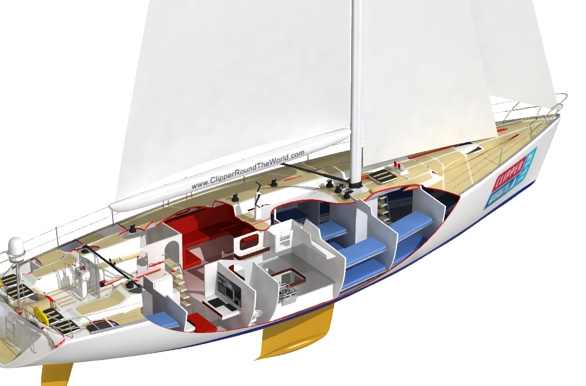
A cutaway of a Clipper68. The blue areas are bunk mattresses. The main red area on the ports side is the saloon with the galley opposite on the starboard side. The small compartment aft of the galley on the stbd side with the two red seats and the computer equipment is the navigation station.
Ok so after sea survival training (Blog 28), the yacht, the team, the skipper and the plan (Blog 29) and the sailing malarkey, or 0425 as I remember it (Blog 31), what about all the other stuff?
Firstly, my kit. I have written previously about trying out some of the clothing and kit I have purchased since Level 1 training back in April. Official guidance was NOT to try out new (and potentially expensive) kit too early and I couldn’t agree more. Back in April I was still firmly in the “let’s see if I like Clipper (probably), let’s see if Clipper likes me (hopefully)” phase but things have moved on somewhat since then. So this time around, and ahead of the issue of the official team kit, I have tried a range of Musto, SportPursuit, Isobar and even Aldi kit. There are also some interesting “top tips” on the crew-only Facebook page, an increasingly useful medium by which to exchange ideas. So far so good. Once again I discussed dry suits with an experienced skipper and once again reached the conclusion that the investment is worth the expense, particularly for Legs 3 and 6. With the exception of a dry-suit, potentially boots (my training skipper circumnavigated in a dry suit and crocs!), and a decent waterproof and collapsible holdall/rucksack to transport it all in then I think I’m almost good to go. One other investment I intend to make is a decent battery pack. I DO intend to continue blogging and to take many more of my own pictures and videos than I have done so far. Right now my ipad is probably up to it but my iPhone is definitely not and while charging points do exist on a Clipper 70 they are not in overly plentiful supply. I either already have the kit or I know now what and how much more I will need. I experimented with sub divisions of washing kit and electrical bits and pieces into ever smaller waterproof bags, my carabiners came into excellent use securing one or two bits and pieces where I could more easily find them, and my drybags and division of kit within them worked very well. Just a case now of scaling up or down depending on leg length – back to back Legs 2 and 3 in 2019 followed by separate Legs 6 and 8 in 2020. Oh and I’ve got weight reduction down to an ever improving art. Final decisions of exactly how much kit (weight) we take will be a decision for individual skipper’s and crew after crew allocation next May.
Secondly, choice of bunk! Having coped with a top bunk during Level 1 I tried out a bottom bunk this time around. Not sure to what extent I will get a choice joining a yacht, as I will be, at the end of Leg 1. And while there was “good news” this time around as there was no “hot bunking” I am not expecting to get away with that on the race itself. When racing the Clipper yachts operate a “hot bunking” system to ensure everyone is sleeping on the high side of the yacht which helps with the boat’s performance. To operate this system I will be paired up with someone from the opposite watch who’s bunk will be opposite mine. This way one of us can always sleep on the high side. So this time is was a bottom bunk and this time it was deliberately right forward. I think it is probably good that I have yet to decide a preference but the first 1.00am in the morning sail change on a wet and blustery night, or 48 hours slamming into a head wind and sea might just change that! The official Clipper Crew guidance states that “it cannot be guaranteed the stowage area will remain dry at all times, it is therefore highly advisable to use some form of waterproof drybag.” This is, in my experience, an understatement!
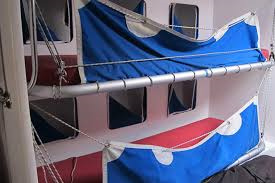
Interior view of a Clipper 68 port side looking forward towards the slightly open hatch to the rope locker. The bulky element on the deck and part blocking the way forward is a sail in its bag. In the Clipper 68 we sleep with the unused sails which are hauled up onto deck through the hatch – the bright/light patch in the deckhead(ceiling) of the next compartment.Double bunk space with the bunks in the “lowered” position. The bunks can be angled to prevent inadvertent rolling out when the yacht is heeled at an angle. Although there is some limited storage space beneath the bottom bunk, space for personal kit is provided by the 3 small spaces that can be seen behind each bunk. Not a lot of space particularly if you are going round the world.Of course, its not always straight and level flight!
Roles onboard. In addition to more sailing and an opportunity to sail a Clipper yacht in a watchkeeping routine, Level 2 was designed to give us all more experience of the various roles we will carry out onboard. I wont dwell anymore on the sailing, or for that matter watchkeeping, given my comments on both in previous blogs, other than to comment that it doesn’t matter how used you are to watchkeeping, or how much watchkeeping experience you have, it STILL takes a little time to get back into the routine. Level 2 was, at least for me, no exception.
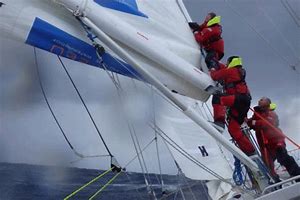
A Clipper “bowman” in less than benign conditions!
The ethos of Clipper training emphasises full participation and both my training crews have accepted this wholeheartedly and everyone has got stuck in in all areas. There has been no shortage of volunteers (so far) from working right in the bows of the yacht, to climbing part way up the mast to assist in reefing or hoisting/lowering the mainsail, to climbing into the “rescue suit” and going over the side to rescue “Bob”. I think the one thing left on my list of “things to do at least once before we race” is going up the mast – and I mean to the top. Watch this space. Once we are in our final race crews we may end up “playing to our respective strengths” and specialising in crew roles where our individual strengths lie. Again that may well be up to individual race skippers and their team’s to decide, post-crew allocation.
During Level 2 we all had a further crack, at least once, in completing the regular engineering drills
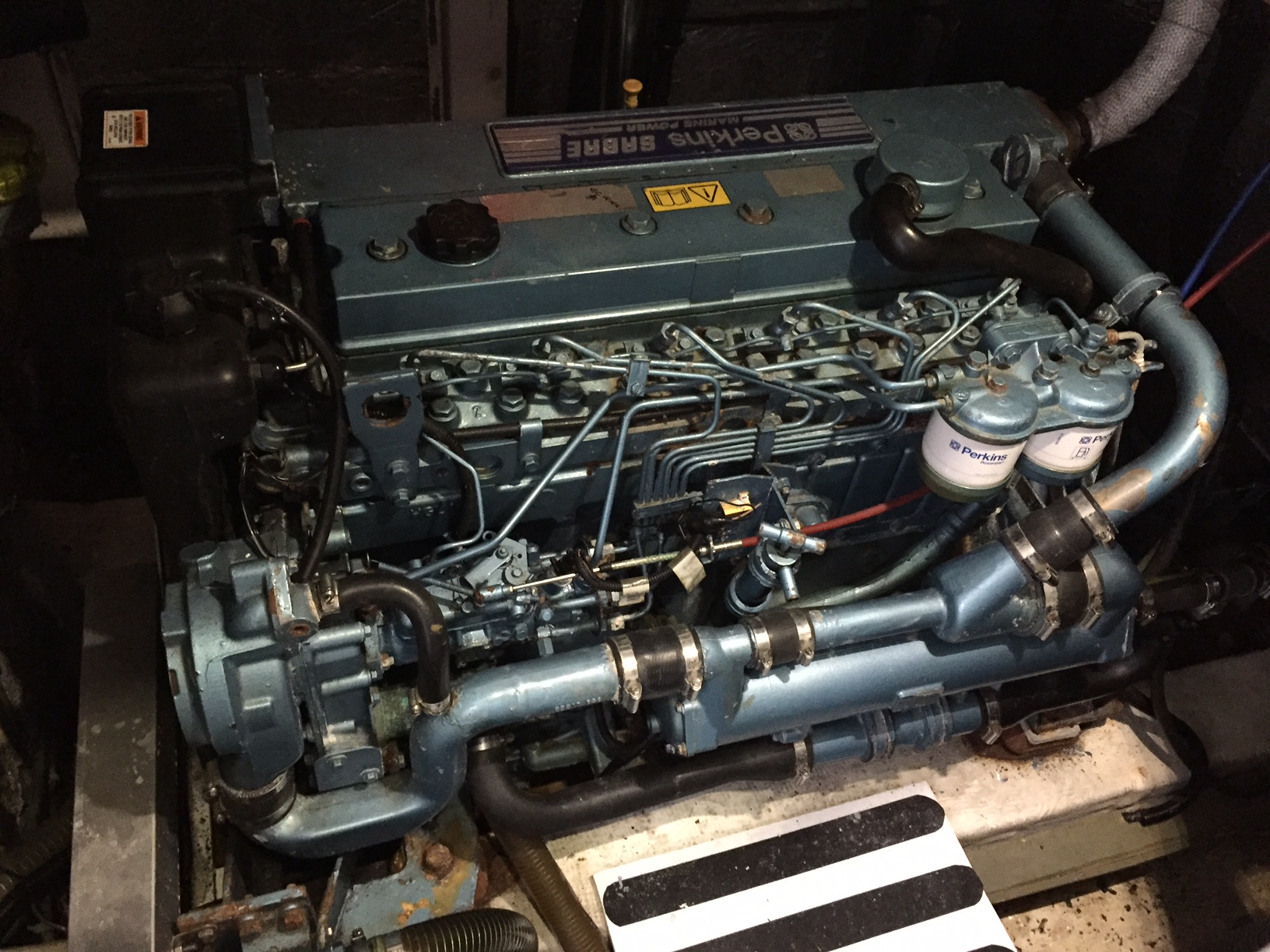
A Clipper 68 diesel engine. Engineering checks use the mnemonic IWOBBLEU. Isolate the engine, Water – two checks, Oil – two checks, Belts – two to check, Bilges, Leaks, Electrics, Un-isolate.
and more Mother Watch experience – preparing and serving meals, drinks and snack for the whole crew plus additional cleaning duties although, as I touched upon previously, Level 2 training revolved around a somewhat modified Mother Watch routine so that maximum participation was devoted to deck and sailing evolutions. My previous baking exploits (see Blog 20, Masterbaking …… or …… Mother Watch preps …. or ……”If I knew you were coming I’d have baked a cake.” published 4 Sep) still await full sea trials.
One of these images is a Clipper 68 galley……. and the other one isn’t!
There are a whole range of deck roles and I’ll briefly touch on a few. I wrote in blog 31 (Level 2 Training Part 3. The sailing malarkey – or 0425 as I remember it) about having a Kate-Winslet-like “go” at bowman for a racing headsail change. In short the bow is one of the high adrenaline positions on deck. It requires nerve, courage, agility and the preparedness to get VERY wet.
The foredeck crew work very closely with the bow and have to be prepared to act as bow should the bowman be injured or absent on Mother Watch. They play a key (and exhausting) role in sail changes as well as helping in the mast area with hoists and reefing. More strength, more agility, more wet! The mast crew is likely to be two crew members from the foredeck crew. They need to work closely together to ensure hoists and reefing are coordinated to be achieved as quickly as possible. More strength, more agility and they need to be able to tie bowlines quickly under pressure and sometimes underwater! Trimmers are responsible for adjusting sail trim to get the optimum sail angles. Good communications with the helm are paramount. Cockpit crew need to be able to operate sail sheets from any point of the cockpit rapidly and accurately. Don’t have any sympathy for them, they get wet too. And finally, at least for the moment – the snake pit. A good snake pit crew is always one step ahead of the game ensuring that each line is ready when needed. The snake pit could be regarded as the centre of operations for almost every manoeuvre and it is from here that crew control all of the halyards and many other sail control lines. Snake pit crew need to be able to lay their hands on any line, day or night, and prepare it for action instantly, whatever the weather. They get wet too. There are, of course, many other yacht specific roles and I’ll write more about these after crew allocation and around the time of Level 4 training.
While watchkeeping we also practiced sailing fast (or trying to when the wind allowed), light-wind helming, downwind helming, repeated man overboard drills, maintaining a proper lookout, navigating and maintaining the yacht’s log, collecting weather data, a little bit of routine maintenance and, most significantly when watchkeeping – WAKING the new watch . Regular watchkeepers will know there is something of an art in itself to this latter skill and it is sometimes neither as easy or successful as it should be!!!
And finally ……. another deep clean (see also Blog 9: “Have you heard the one about the Englishman, the Irishman and the Scot………….” published 9 Jul). This time our mate, Anna, drew up a random list of allocated jobs – at least I hope it was random as I got the HEADS and off we all went! I could write a blog on its own about the art of deep cleaning toilets following use (at times) by up to a dozen people at an angle and a whole chapter about the migratory habits of pubic hairs – howDO THEY travel so FAR? But as my Mother is an avid reader of this blog I’ll perhaps save that for a time when I can distract her with other things!….. and in fairness to my fellow Level 2 Clipperees, cleaning the heads was also a daily routine during Level 2 so this particular deep clean task was nowhere near as bad as I suggest.
So after all that “how was it for you?” or rather how was it for me? First and foremost it WAS high quality training. Secondly I was again impressed by the international mix of the crew, their (our) collective teamwork and that level of heightened camaraderie that forms in any team facing up to personal and collective challenges. There is already a great “family” feel to Clipper. It was also great fun. Not as tiring as I remember Level 1 even though watchkeeping is always tough for the first 24 hours or so. Perhaps my fitness programme is paying off? It certainly feels like it as Level 2 “recovery” was much quicker than getting over Level 1 and yes, I guess NOT falling off also helped. I’m certainly enjoying swimming again and I enjoy yoga MUCH more than I imagined I would. I’m still giving “running UP the stairs” a miss though (See Blog 3: Its All Really A Question of Balance!” published 21 May, and Blog 21: “Somewhere a clock is ticking ….. or …. The Fitness programme goes on….. and on!” published 11 Sep). I was quietly surprised by how much I retained from Level 1 and by how quickly the rest of it came back and my kit choices (at least so far) seems to be on the right track. Clipper IS addictive. I’m trying hard NOT to let it rule my life and one day soon I might actually get through a day without thinking about it. Its hard already to get through a day without talking about it.
100 years ago today the guns fell silent on the Western Front in Europe, at the 11th hour of the 11th day of the 11th month of 1918, the Armistice marking the end of fighting of World War One having been signed at 5.20am that morning.
This morning I dusted off my uniform and medals and joined a congregation of over 500 men, women and children to mark Remembrance Sunday and the Centenary of the Armistice. I read the second reading in church (Matthew, 5 verses 1-12), the last post rang out at precisely 11am and 39 poppy wreaths were laid at the Eccleshall war memorial. On this centenary year, we have added the names of 17 men from Eccleshall, killed during the Great War, whose names were missed off the war memorial when it was originally unveiled in 1921. Later this afternoon I rang the half tonne tenor bell as I joined 7 other bell ringers in ringing a 47 minute quarter peel to mark the Centenary. The bells had rung a quarter peel, half-muffled, earlier in the day ringing the 6 bells that date back to before 1914 and would therefore have rung to celebrate the end of the fighting 100 years ago today.
The Central Council of Church Bell Ringers (CCCBR) have mounted a campaign to recruit an additional 1,400 new bell ringers this year; 1,400 being the number of bell ringers known to have lost their lives during the First World War. After the original Armistice every bell tower in the country was written to in order to compile a central roll of honour. 1,100 names were recorded. During the Centenary this list has been reviewed and in the process the Council discover a further 300 bell ringers who died in service. Two bell towers – Edington in Wiltshire and Bamburgh in Northumberland – lost 6 ringers each. The Edington ringers were at the heart of the local community. While one was a carer in a local hospital, others were farmers and a wheelwright. Four of the 6 played in the local football team. None were recorded on the original Roll of Honour because no one was left in the tower to reply to the original CCCBR letter.
Services, ceremonies and parades often centre on Cenotaphes, war memorials and cemeteries and there are some 2,500 Commonwealth War Cemeteries worldwide. In each of these cemeteries headstones inscribed simply “A soldier known unto God” mark the final resting places of those who could not be identified. The huge monuments at the Menin Gate and at Thiepval list the 55,000 and 72,000 British and Commonwealth troops who have no known graves from the battles around Ypres and on the Somme respectively in The Great War. It is often surprising to come across sailors at some of these sites so far from the sea but the Royal Navy provided a Division, some 10,000 men, who saw action on the Western Front in the First World War, including during the battles on The Somme and at Passchendaele.
The memorials to the officers and men of the Royal Navy and Commonwealth navies who were killed at sea and have no known grave are at Plymouth, on Plymouth Hoe overlooking Plymouth Sound; at Southsea in Portsmouth overlooking The Solent and
The Portsmouth Naval War Memorial
the approaches to Portsmouth Harbour; and at Chatham. They list a total of 66,500 officers and men. Other Naval memorials can be found at Halifax and Victoria in Canada, Auckland, Mumbai, Chittagong and Hong Kong and in each case the men listed have no other grave than the sea. More than 3,000 British-flagged merchant vessels and fishing vessels were lost during the First World War. 4,700 were lost during WW2. Civilian merchant sailors and fishermen are remembered on memorials in coastal towns and cities throughout the country. The Tower Hill Memorial is a pair of memorials in Trinity Square on Tower Hill, London that commemorates 12,000 civilian merchant sailors and fishermen killed as a result of enemy action in the First World War and 24,000 merchant seamen killed during the Second Wirld War, all of whom have no graves other than the sea.
“In ocean wastes no poppies blow,
No crosses stand in ordered row,
There young hearts sleep …. beneath the wave…
The spirited, the good, the brave,
But Stars a constant vigil keep,
For them who lie beneath the deep,
’Tis true you cannot kneel in prayer
On certain spot and think. “He’s there.”
But you can to the ocean go …
See whitecaps marching row on row;
Know one for him will always ride….
In and out …. with every tide.
And when your span of life is passed,
He’ll meet you at the “Captain’s Mast.”
And they who mourn on distant shore
For sailors who’ll come home no more,
Can dry their tears and pray for these
Who rest beneath the heaving seas ….
For stars that shine and winds that blow
And whitecaps marching row on row.
And they can never lonely be
For when they lived … they chose the sea.” (Eileen Mahoney, 2001)
HMS Coventry, sunk with the loss of 19 officers and men, May 1982
HMS Coventry (above)was hit by 3 1000lb bombs in the South Atlantic on 25 May 1982. She sank in 12 minutes. HMS Barham (below) was hit by 3 torpedoes in the Mediterranean on 26 November 1941. She blew up within 5 minutes of being torpedoed with the loss of 862 officers and men. Next of kin were asked to keep their husbands loss secret ….. “it is most essential that information of the events which led to your husband’s loss of life should not find its way to the enemy until such time as it is announced officially.” The sinking of HMS Barham was announced on 27 January 1942.
Remembrance Sunday services on board Her Majesties Ship’s will be held at sea this year as they always are by those warships, men and women who are on patrol. In the larger of our ships these services will be conducted by the ship’s own chaplain. In ships away for 6 month periods, such as the Falkland Islands or the Arabian Gulf and Indian Ocean, chaplains will be deployed to conduct such services, but in all other minesweepers, frigates, destroyers and submarines the Captain leads and conducts the service. Traditionally, and where possible, such services are held on the upper deck (i.e. outside) and are attended by all personnel other than those required to keep the ship functioning, even when at anchor. The ship’s Battle Honours Board (a board on which all the Naval actions in which ships of that name have seen action are carved) often acts as the centre piece at which poppy wreaths are laid by the Captain and, traditionally, the most junior person onboard. Wreaths are not, as a matter of course, put into the sea except on occasions when ships are in the vicinity of known naval wrecks (classified themselves as war graves) where every effort will be made to lay wreaths in the vicinity. Services where such wreaths are laid on the site of a wreck of a ship with the same name are particularly moving. Ships operating in the South China Sea nearly always divert to hold Remembrance services over the wrecks of HMShips Prince of Wales and Repulse, the final resting place of over 800 officers and men killed in 1941. Both wrecks, upside down in about 65m of water, have buoys and wires fixed to their propeller shafts to which large white ensigns are attached and regularly replaced, beneath the surface of the sea.
This time next year, on Remembrance Sunday, I will be about 12 days or so into the Clipper 2019-2020 crossing of the Southern Ocean. I will be somewhere like 2,400 miles from South Africa and a similar distances from Western Australia, pretty much right in the middle. It is highly possible that, with the exception of the other Clipper yachts the nearest humans will be those manning the International Space Station, but ………….. with “whitecaps row on row” …………. I will remember them.
Following our night at anchor – 15 minute fixing and hourly cable/deck checks – (see the end of Blog 29, Level 2 Training Part 2. The yacht, the team, the skipper and the plan, 28 Oct) we spent the rest of the week south east, south and south west of the Isle of Wight, within sight of, but clear of the main NE-SW going traffic.
Once again we tacked (putting the bows through the wind) and gybed (putting the stern through the wind). On both manoeuvres the sails also swap sides and in order for this to happen the “ropes” controlling the ends of the sail need to be released from the “working” winches – the winches bearing the load prior to the manoeuvre – and hauled in (by hand around the winch at first and then by winch-power and handle) on the opposite side of the yacht. One of the main differences between a tack and a gybe is that the sails remain “powered” up when sailing downwind. The Mainsail and boom are often well out from the centre-line of the yacht and, for safety reasons, the boom and Mainsail have to be brought back onto the centre-line before a gybe. And I haven’t yet mentioned the requirement to rig foreguys (as preventers) when running downwind but maybe I’ll save that for another day!
Bob (our friendly man-overboard dummy) continued his rather annoying habit of falling overboard on a daily basis – whether we were going upwind or downwind. He did at least have the decency to do this when most of us were up and around on deck so we all got maximum training benefit – bless him. We did, on one occasion, get our Bob-recovery-time down to 6 minutes and achieved a lasso recovery using a rope under his armpits before the rescue swimmer was dressed. Even that pales into insignificance when compared with the feeling that goes with hosing Bob down at the end of the week and lowering him (I will admit just a little unceremoniously), down below, where his only claim to fame is that he gets in the way!
Not entirely as per Clipper 68 but you get the idea
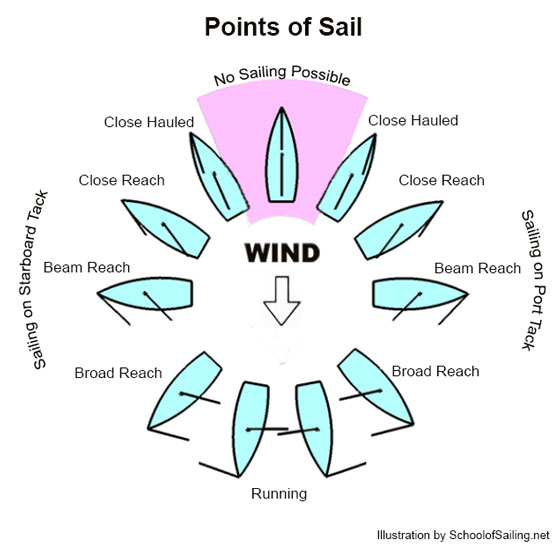
We relearnt, revised, and put into practical use our sail anatomy and not only did we revise our points of sail (the angle to which the yacht is sailing relative to the wind), we also practised helming to various points of sail by day and by night, with the aid of instruments and without, and practiced trimming (adjusting) the sails accordingly.
Each Clipper yacht carries 11 different sails: Mainsail, Yankee 1, Yankee 2, Yankee 3, Staysail, 3 different sizes/weights of Spinnaker and a Windseeker, although for Levels 1 and 2 we have been using the Main, all three Yankees and the Staysail. Spinnaker training is what Level 3 is all about. Each sail has a specific wind range within which it will provide optimum performance and the best combinations of sails depends on wind speed, sea state, point of sail and even the condition of the sail. The size of the Mainsail can be adjusted by reefing (reducing its size) or shaking-out a reef (increasing the size of a reefed sail) according to the wind speed. Clipper yachts have a slab reefing system which, as the name suggests, allows large sections of the sail to be taken out of, or put into play. The following are the “rough guide” recommended maximum wind strengths for Clipper sails:
Yankee 1: 18 knots apparent
Yankee 2: 24 knots apparent
Yankee 3: 30 knots apparent
Staysail: 35 knots apparent
with 3 possible reefs in the mainsail depending on conditions.
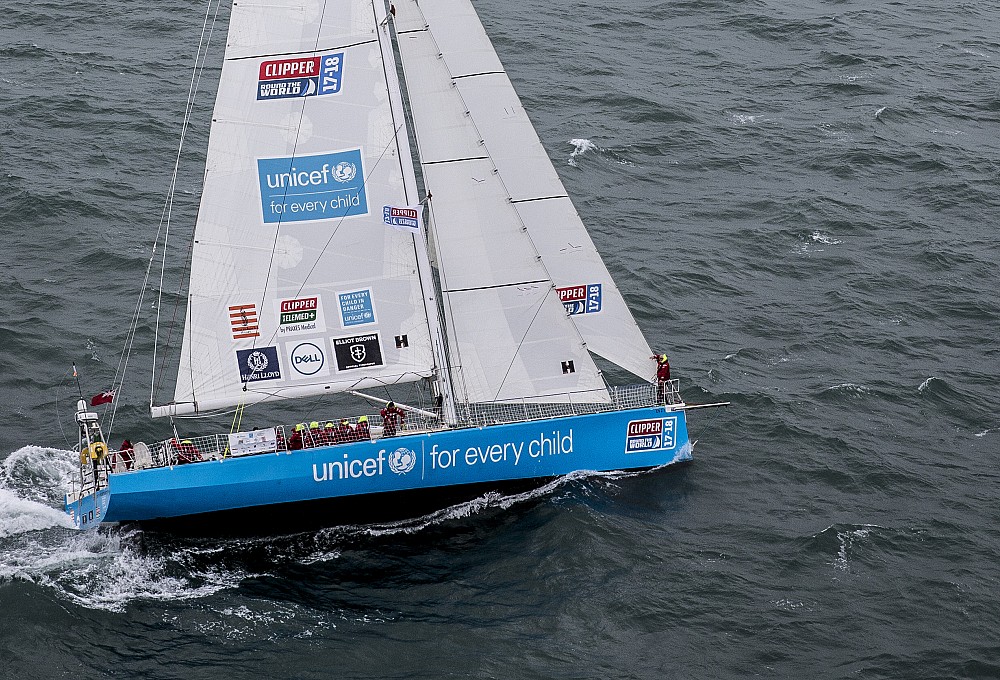
Unicef. A Clipper 70 under (from right to left) – Yankee, Staysail and Mainsail
As well as reefing the mainsail, shaking out the reefs, and changing the headsails we also practiced a racing headsail change or two on the Yankees. The speed of a headsail change is not measured by the time it takes to complete the overall evolution but by the time the yacht does not have a trimmed headsail up. To minimise this time a “racing headsail” change is conducted. This involves bringing the new sail up from below while still racing, and pulling it manually up to the bow on the windward side. The “tack” of the new sail is attached to an appropriate strop on the deck and then the luff is hanked (individual D shaped hanks applied by hand) on to the forestay by the bowman – an individual who perches, clipped-on to something suitable, Kate Winslet-like but facing astern, right in the bows of the yacht (the pulpit).
A Clipper “bowman” in less than benign conditions!
I had a go at this task, thankfully in benign conditions. When ready the “old” sail’s halyard is eased and as it drops the bowman unclips the hanks as they reach his (or her) level. The speed of the drop should be the speed at which the bowman can un-hank the sail. The bowman ultimately unclips the halyard from the old sail (don’t let go!) and attaches it to the new sail. The “sheets” also have to be changed over by other deck crew AND the old sail has to be kept under control, correctly folded, sail tied and ultimately returned to its bag and put below. Can’t wait to do all this when it’s blowing up a bit so very useful experience in more forgiving conditions.
“The pessimist complains about the wind; the optimist expects it to change; and the realist adjusts the sails” ……. so we adopted the realism mode and also practiced our “trimming” – tightening in or easing out the sails for optimum performance guided, at least in part, by “tell-tales.”
Tell-tales are very simple and effective trimming indicators attached to the luff of headsails and the leech of the mainsail. For various aerodynamic reasons they do not work when sailing downwind but in other conditions they are visual representations of how well the air is flowing over either side of the sail. At its most simple, if the tell-tales on both the windward and leeward sides of the sails are flowing straight along the sail in a fore and aft direcrtion then there is a good, equal and attached laminar air flow over the sail. Simples. Trim can also be adjusted by moving the headsail car position (a moveable turning block – traveller – on a railcar system attached to the upperdeck through which the headsail sheets run) which is used to set the tension on the foot and the leech of the sail – but I think that’s enough of trimming malarkey for the moment. Lets just say we practiced it – day and night – and for different points of sail and all you really need to remember is “if in doubt, let it out” and “a flappy sail is an unhappy sail.”
We spent quite some time working in the snakepit – that area on the upper deck, surrounded by 5 pit winches; 3 forward of the pit and one to each side – and into which pretty much every sail control line (except the Mainsail sheet) comes and where sail ties are also kept. It’s called the snake pit because that is exactly what it resembles, a pit of snakes.
Most of the ropes – ok lets get nautical – delete ‘ropes’ insert “halyards” (ropes that are used to hoist the sail up the mast/forestay), “sheets” (ropes that pull the headsails (Yankees and Staysail) in and out (the Main-sheet is used to control the angle of the mainsail and has its own dedicated winch on the port side in front of the helm and is therefore NOT in the snake pit). With headsails sheeted IN the yacht will be able to sail closer to the wind and vice versa. “Reefing lines” (ropes that are attached to the mainsail and run to the snakepit via clutches in the mast) – used to reduce (reefing in) the size of the mainsail, the “outhaul” (a rope that is used to control the shape of the curve of the foot of the sail) and the “topping lift” (a rope that applies upward force on a boom used primarily to hold the boom up when the sail is lowered) – pretty much everything comes into the snake pit. All are generally different colours and most come through “clutches” (provided for some lines to grip under tension by means of a lever and cam, which enables winches to be freed for other purposes) and a “jammer” each of which is, generally, labelled. Ok so far so good. After a little experience it IS possible
Jammers on a Clipper 70. The white tabs indicate that the jammer is “open”
to make sense of this chorded-confusion in DAYLIGHT. Now try it at midnight under the light of a red head torch – which makes all colours look pretty much the same – AND after the previous watch, for very good nautical reasons, have moved lines off the winches on which you had expected to find them, AND added a few extra lines/sheets etc where you did not.
Ok, I guess it could be worse!
And for the really heavy work we have the coffee-grinder that can be switched to “drive” either of the two primary winches – one on each side.
I need now to introduce the handy billy and the marlin spike. The handy billy is a pulley-like arrangement, similar to the one shown here, used to attach to the reefing cringle when making a new tack between the mast and the boom during the reefing of the Mainsail. It follows that when “shaking out the Reef” and re-hoisting the Main that the handy billy must be released by “spiking” the release mechanism by use of a marlin spike (or similar) kept in the snake pit.
Just to add a little extra “spice” to all the new terminology, we also learnt that to avoid inadvertent “spiking” and thus early/inadvertent release of the handy billy the use of the word “spike” was verbotten. During the week, the executive order “to spike” would be given by the use of a term or word unlikely to ever be encountered at sea. Are you with me so far? And that word for our Clipper Level 2 training would be …………………….…. “hedgehog!” on the basis you wouldn’t see many, or even ANY. Now, having already explained to fellow crew members the Naval origins of the terms “Two-Six Heave” and “4 square meals a day” I did not think the time was right to do a short piece on 1942 Royal Navy Anti Submarine weapons systems ……… so I kept quiet!
………. and the other isn’t.
Two types of “Hedgehog.” One is a 1942 Royal Navy Anti-submarine weapon……
For me, Level 2 was pretty nearly always 25 minutes past 4 in the morning. Because that’s when my watch stopped. 25 minutes past 4 on the first Sunday morning. Thankfully it didn’t turn out to be some weird omen or spooky premonition. It just meant my battery had packed in. I don’t remember the last time it happened, but watchkeeping ……….. without a watch …………. adds a certain je ne said quoi to waking in the dark of a pitching yacht, woken by some strange noise or sudden lurch, and NOT knowing what time it is, not knowing how much longer you have until your opposite watch will wake you from your interrupted slumber, and not knowing how much more sleep you might get if you managed to get straight back to sleep. It makes remembering to make hourly log book entries that little bit more difficult too. Somewhat un-nerving at the start it did, eventually, become rather liberating. Time becomes defined by changes in the light as the sun sinks or rises; by meal “times” even when whole-crew yacht evolutions make lunch something of a moveable feast. Sleep, eat, sail, repeat. Maybe I should try it more often? Or maybe I should quit trying to be philosophical and just go out and buy a new watch battery 😉.
………. Level 2 training ………… “Level 2 Training Part 4. All The Other Stuff” ………… to be continued…… …
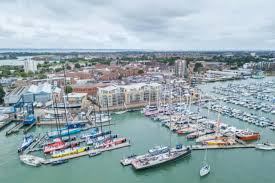
Immediately after Sea Survival training it was a short drive down to Clipper HQ in Gosport to meet our Mate and Skipper and move onboard our Clipper 68 for the rest of Level 2.
The 10 of us who had completed the first pool session were, unsurprisingly, the 10 who would now form crew 1 and once again I was training in CV2 (see Blog 15: Size Is Not Important, 13 Aug, for a brief resume of CV2’s Clipper history). After issue of our new Musto training foul weather smocks and sallopettes (red not gold), Anna (UK) our Mate, with bags of offshore yachting experience, led us immediately into the agility test as part of our Level 2 assessment. With all of the Clipper 70s in which we will race next year now in Gosport, bar two currently out of the water for refit (see short video Blog 18: First 2019-2020 stopover announced…., 26 Aug), and Qingdao already in 2019-2020 colours for a corporate event, Anna led us around the marina to one of the Clipper 70s for this first part of our Level 2 assessment. This kicked off with testing our ability to get onboard without the assistance of the step via use of one of the berthing ropes. The agility test, both above and below deck, also allowed us all another look around a Clipper 70, and for some of us this was a first. Rather like my look around Liverpool 2018 back in July, this all helped bring Clipper 2019-2020 that little bit closer and I couldn’t help but reflect that this time next year I will be in a Clipper 70 in the South Atlantic.
The team were a similar international mix to previous training. 5 men, David (from the East coast of the US), Mitch (from the West coast of the US), George, Rob, (who I had met previously at the Little Ship’s Club in London (see Blog 8: So How Did It All Start(2), 1 Jul) and myself all from the UK, and 5 women: Anna (from Portugal), Meta (from London but originally the US), Katrina (from London but originally Germany), Lucia (from Aberdeen but originally Czechoslovakia) and fellow blogger Jo from the UK – check out her blog at http://www.jojosclipperjourney.com. George and Jo had previously completed Level 1 together in July and Lucia was one half of the team that pulled me from the water (or at least waist deep from the water) right at the end of our own Level 1 back in April (Blog 9: Have you heard the one about ……., 9 Jul). Not surprisingly, having travelled from the West coast, Mitch was completing Level 1 and Level 2 back-to-back. We were split into two watches of 5 – George, Rob, Meta, Lucia and me in one watch, David, Mitch, Anna, Katrina and Jo in the other. As far as ages are concerned then let’s just leave it by saying that in a race to see who was eldest I would very comfortably achieve a podium finish and the last time I had a 25+ year age difference between me and the “skipper” I was an 18 year old Midshipman! There is, of course, no substitute for experience ………… I just need to get some in a yacht.
We were extremely fortunate (in my view) to have Chris Kobusch as our training skipper. In his early 30s and originally from Herford, North Rhine-Westphalia, Germany, Chris has been an RYA Yachtmaster (Offshore) since 2009, had previously been a Clipper training skipper in Sydney and has over 100,000 miles in his yachting log book. Perhaps more significantly Chris was the skipper of Qingdao during the 2017-2018 Round The World Race. During Leg 4 around Australia, Qingdao was hit by lightning during a 40knot Southerly Buster (violent squall) and still finished 5th on arrival in the Whitsundays. Chris and his crew achieved 4 podium finishes: 3rd into Sydney, 3rd on arrival into Sanya, 1st across the North Pacific into Seattle and 1st in the final race from Derry-Londonderry to Liverpool. Qingdao finished 3rd overall with 135 points, only 4 points behind Visit Seattle in 2nd (139 points) and only 8 points behind the winners Sanya Serenity Coast (143 points). In his profile interview for Clipper ahead of the previous race, in answer to the question, “what’s your favourite word?” Chris replied:
”Donaudampfschiffahrtsgesellschaftkapitanwitwe.”
He went on to say, “Just kidding, my favourite word is Lekker, which is Afrikaans and can be used to describe anything good.”
As one wag put it, Chris was the first placed …………. man ………… and the winning …………. German. All this and a sense of humour 😉
Once back onboard CV2 Chris led us through an extremely comprehensive safety brief, with plenty of questions to us all to test what we remembered from Level 1, and took us through the plan for the week. More safety, and upper deck safety tomorrow morning, including MOB drills (tethered and untethered – see Blog 8: Have you heard the one about ………., 9 Jul) and sailing around lunchtime. The weather forecast for Saturday morning was heavy rain. The plan would then be to go through a mainsail hoist and then put 3 reefs in – one after the other before manually rigging the bow anchor (regular readers will remember my Level 1 observation that anchoring a Clipper Yacht is a very mandralic event), and then lowering the reefed mainsail and anchoring in a suitable lee provided by the Ise of Wight. We would be in anchor watches overnight Saturday/Sunday. Lucia and I would subsequently have the 0100-0300 Watch, for Naval and ex-Naval readers, my first Middle Watch (or Part Middle) for a good few years. We would weigh anchor on Sunday morning, shake out the 3 reefs as we hoist the mainsail, rig and hoist the headsails – Staysail and Yankee 3 in the first instance (more about mainsail, reefs and headsails various in the next Blog) and switch into a watchkeeping routine at 2000 on Sunday evening. The plan was 4 hours on, 4 hours off overnight between 2000 and 0800 and then 6 on, 6 off 0800-1400 and 1400-2000 BUT …………. and isn’t there always a but ……………. between 1200 and 1600 both watches would generally be required ”on deck” for lunch and, more importantly, training evolutions that would require everyone to make the most of the opportunities, be that MOB exercises downwind or racing headsail changes etc. By the time Chris had finished there was time (just) for a swift drink in The Castle – “one for the road”, or perhaps “one for the channel.” And at least one of my “unknowns” from Blog 21: ‘Twas the night before ………, 12Oct, was answered …. we would be “turning left” out of Portsmouth and leaving the Solent via Sandown Bay and Nab Tower.
…………….. Level 2 training …………… “Level 2 Training Part 3 The sailing malarkey” …. to be continued …………..
Ok bottom line up front …………… assessment passed so its on to Level 3 training next year PLUS I didn’t fall off the yacht this time so Level 2 was win, win 🙂
Actually there was just a little bit more too it than that. A Friday afternoon drive down to Portsmouth and an opportunity, amongst other things, to catch up with my future sister-in-law-to-be and help her demolish a bottle of my younger brother’s red wine – my kinda sea survival prep!
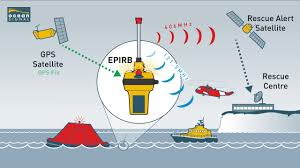
We (21 of us in total) started the Saturday morning at Brune Park School in Gosport for the Clipper version of the RYA Sea Survival Course. It had been about 12 years since I last did a Sea Survival Course and Brune Park School swimming pool was a vast improvement on Horsea Lake. The first half of the day was in the classroom looking at just about everything that could go wrong (fires, floods, collisions, heavy weather, man over boards, catastrophic sinking, cold water shock, hypothermia, frostbite, sea sickness, starvation, dehydration etc etc – all good morale boosting stuff!) and various chances of survival (or otherwise) plus a vast array of equipment and techniques all designed to make survival/rescue a realistic possibility (warm clothing, waterproofs, dry suits, abandoning ship controlled, abandoning ship catastrophic, EPIRB – Emergency Position Indicating Radio Beacon, SART – Search and Rescue Radar Transponder, flares, life jackets, spray hoods, life rafts and what to take with you, food rationing, water rationing, first aid etc etc). Top tip – only leave the yacht as a last resort, usually only AS it sinks or if it catches fire and you can’t put the damn thing out. Take the EPIRB with you if you abandon the yacht but if there is no time, and the yacht sinks quickly then Clipper EPIRBs, like Clipper life rafts, have hydrostatic releases which will “fire” as the yacht sinks (normally at depths of between 1 and 4 metres or 3 to 13 feet) 🙂
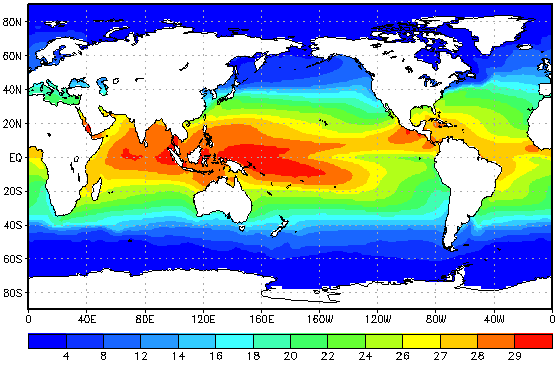
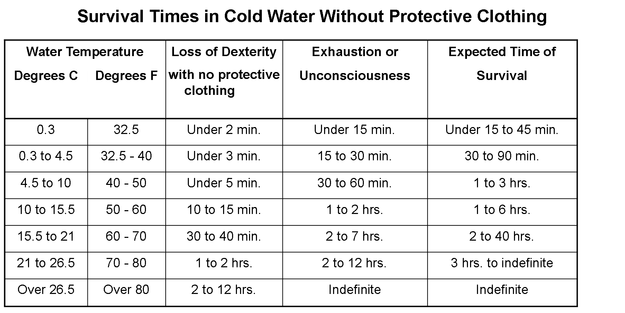
We did spend a rather unhealthy length of time discussing drowning – (drowning, near-drowning, secondary drowning or late onset near-drowning!) at least until we actually got into the pool. On average about 400 people drown in the UK each year – more than die in motorcycle accidents or pedestrians in road traffic accidents. The sea around the UK is officially designated as a “cold water” region, with water temperatures ranging from 4-6 degrees C in February and March, rising to 14-18 degrees C in August and September. The sea temperature lags behind the seasons by about 2 months. The mid to northern Pacific coast and the North Atlantic coasts of the USA and Canada, the southern Argentinian and Chilean coasts off South America, and the waters off New Zealand’s South Island and Tasmania also suffer from sub 15 degrees C sea temperatures. The average sea temperatures for my Legs – 2, 3, 6 and 8 – will be south of 15 degrees C.
Average Annual Sea Water Temperatures in Degrees C
Because water conducts heat away from the body at a rate 26 times faster than air, the human body cools at a rate 4 to 6 times faster in water than it does in air of the same temperature. A body falling into water below 15 degrees C will suffer cold shock within 30 seconds to 3 minutes of immersion. After 3 to 30 minutes the body automatically starts to constrict the blood vessels feeding the muscles to your legs and arms to reduce heat loss and keep key organs warm.
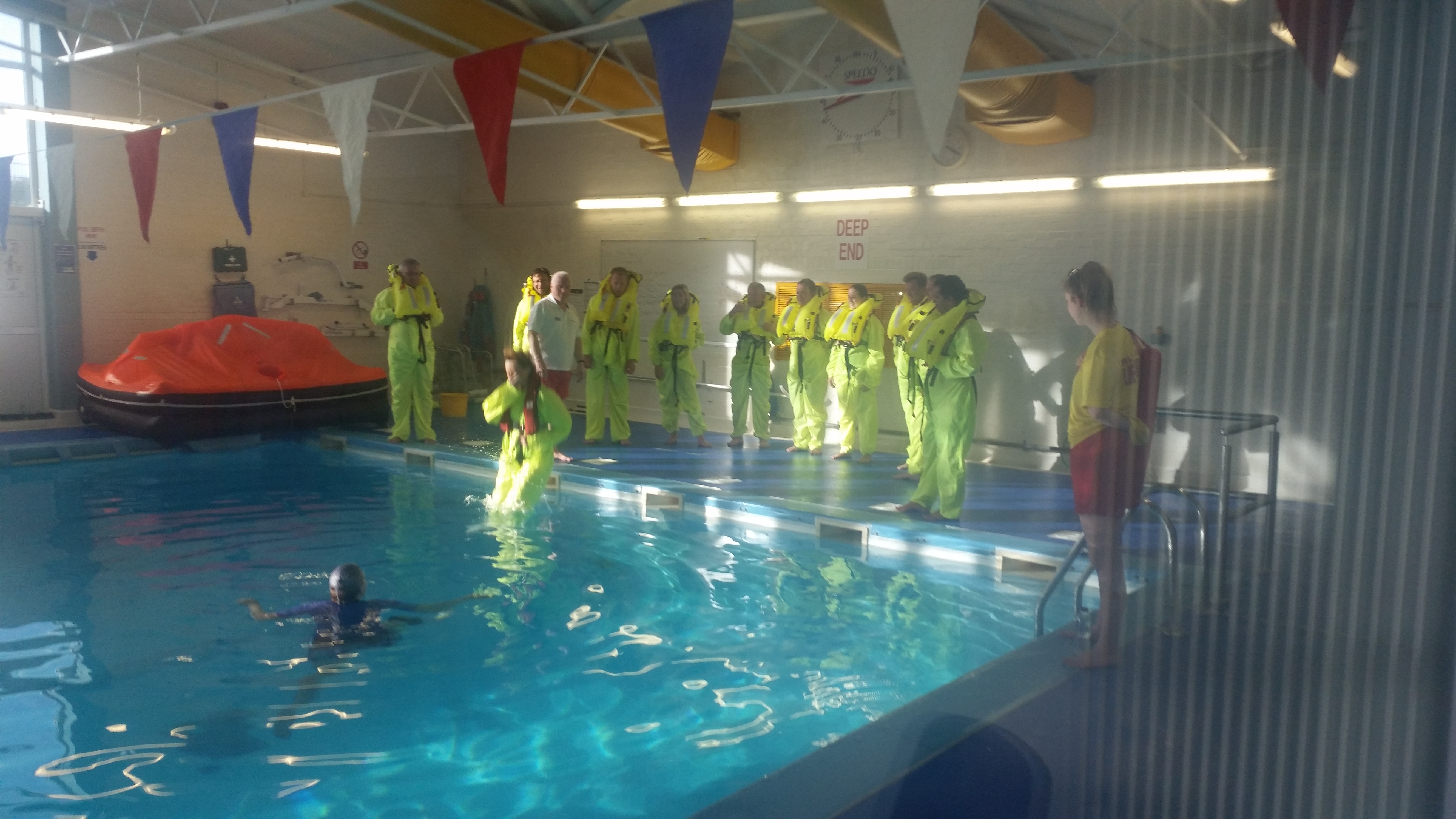
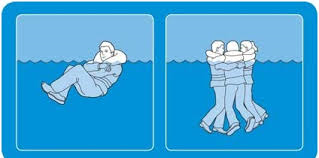
Once all that was over, and after a brief lunch, it was into the pool. Shiny yellow suits and inflated life jackets on, it was jumping in, adopting the HELP position (Heat Escape Lessening Posture) and various lengths of the pool swimming with arms and legs, legs only, arms only (recommended) and with spray hoods down. I don’t mind admitting that spray hoods down is unpleasant.
The HELP position – Heat Escape Lessening Posture
I find it claustrophobic and difficult to breath, particularly when swimming. But – and isn’t there always a but – it significantly reduces the chances of all that drowning I mentioned earlier. We practiced towing another Clipperee by wrapping our legs firmly around our buddy or by hooking our feet under their armpits. We practiced towing multiple buddies (up to 5 or 6). We swam a length with our eyes closed – just to prove how hard it is – even in very good conditions – to swim in a straight line with an inflated lifejacket on (it helps a little to swim with your dominant hand fingers-open) and we practiced a floating-feet together-group-huddle. And then finally we got to go boating – or rather rafting. Life rafting. 10 or so of us in an 8 man life raft was certainly cosy – and very warm very quickly – and we practised lookouts, baling, rigging and steering by drogues. We also practiced, individually, righting a capsized life raft by pulling it over our head, remembering at the vital moment to raise a fist to punch the floor as it drops on top of you so as to create an air pocket in which you can breath and thus orientate yourself to escape. Life rafts have large stability pockets that hang down beneath them and fluorescent strips on the underside to indicate escape routes to avoid entanglement in these pockets. It pays to orientate yourself before trying to get to the surface. It would be doubly ironic to drown UNDER a life raft!
One of the keys about survival has to be, in fact must be, will power. A bloody-minded determination not to be beaten. Adaptability, optimism, tenacity, resilience, purpose, resourcefulness, belief, knowledge, and training are all going to be contributory characteristics. It is also possible to learn from others. Maritime history (and the Sea Survival Handbook) are full of extraordinary examples of survival. Here are a few of my favourites …
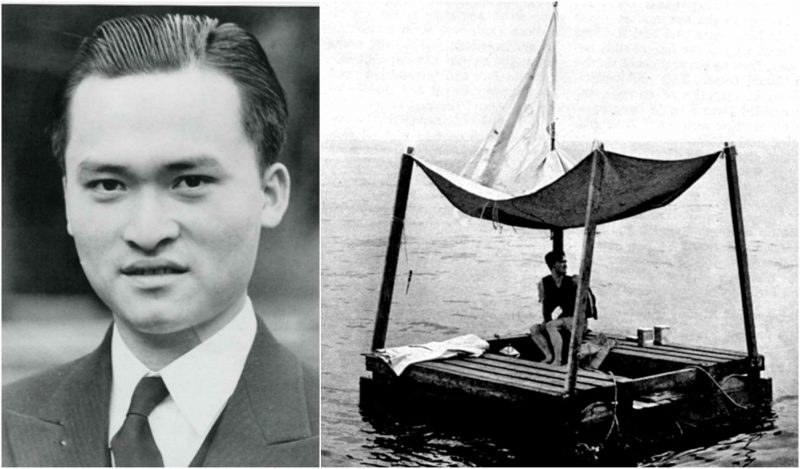
A Chinese sailor called Poon Lim working as a second steward in the SS Ben Lomond survived alone on a wooden raft for 133 days after his ship, sailing alone and unescorted, was torpedoed in the South Atlantic on 23rd November 1942. The ship sank in 2 minutes. After 2 hours in the water Lim found and climbed on to a 8ft square wooden raft. The raft had several tins of biscuits, a 40 litre jug of water, some chocolate, a bag of sugar lumps, some flares, two smoke pots and a torch. After his ordeal (he was rescued by Brazilian fishermen as he drifted near the coast of Brazil), he was awarded the British Empire Medal and after the war he emigrated to the United States. He died in Brooklyn in 1991 at the age of 72.
Dougal and Lynne Robertson, their three children and an unsuspecting hitchhiker, Robin Williams, survived for 38 days in their dingy and life raft in 1972 after their 43ft yacht, Lucette, sank after being holed by a pod of killer whales 200 miles west of the Galapagos Islands in the Pacific. Dougal Robertson told the story of their survival in the book The Last Voyage of the Lucette (with a forward by Sir Robin Knox Johnson). Also see http://www.survivethesavagesea.com
Maurice and Maralyn Bailey, a British couple, survived 117 days in a life raft in the Pacific after their 31ft yacht, Auralyn, was holed by whales (there’s a theme here!!!) in 1973. Their journey began from Southampton and their intended destination was New Zealand. They passed safely through the Panama Canal in February but were struck by a whale at dawn on 4th March. They managed to salvage some supplies, some food and a compass and transfer them to an inflated life raft and a dingy before Auralyn foundered. After drifting some 1,500 miles they were rescued by the crew of a South Korean fishing boat on 30th June and were brought onboard in an emaciated state. They recounted their story in the book 117 Days Adrift, published in 1974 and, the following year, they returned to sea in their new yacht, Auralyn II.
John Glennie, Rick Hellriegel, Phil Hoffman and James Nalepka survived 119 days on the upturned hull of their catamaran Rose Noelle in 1989, when it capsized in the southern Pacific off New Zealand after being hit by a rogue wave. Glennie and Nalepka both wrote books about their ordeal and their story was told in a 2015 New Zealand television film, Abandoned. The other crew admitted they came close to killing Glennie, blaming him for getting them into trouble in the first place!
and finally ……. Steven Callahan, an American author, naval architect, inventor and sailor who survived 76 days adrift in the Atlantic. In early February 1982, 7 days out from the Canary Islands and heading for Antigua, Callahan’s 21ft sloop Napolean Solo, which he designed and built himself, was badly holed by an unknown object during a night storm and became swamped. In his book, Adrift: 76 Days Lost At Sea, Callahan writes that he suspects the damage was caused by a collision with ………………. yes, you guessed it………….…. a whale. Callahan escaped into a 6 man life raft and managed to retrieve a number of essential items including a sleeping bag, some food, charts, a short spear gun, flares, torch, solar stills for producing drinking water and a copy of SeaSurvival, a survival manual written by ……………… Dougal Robertson of Lucette fame! Having survived on mahi-mahi, triggerfish (which he speared), flying fish, barnacles and birds that he caught, and using his stills, and captured rain water, to produce up to a pint of water a day, he drifted for some 1,800 miles and across at least two shipping lanes (he spotted 9 ships) without rescue. On the evening of 20th April 1982 he spotted the lights of an island south east of Guadeloupe and was rescued by local fishermen the next day. During the ordeal he faced sharks, raft punctures, equipment deterioration, physical deterioration and mental stress. He lost a third of his body weight and was covered with scores of saltwater sores. He described seeing the night sky at one point as “a view of heaven from a seat in hell” and still enjoys sailing and the sea, which he calls the world’s greatest wilderness.
……………… Level 2 Training…………………. “Level 2 Training Part 2 The yacht, the team, the skipper and the plan”……to be continued …………………..
“Twas the night before Clipper, when all through the house,
Not a creature was stirring, not even a mouse.”
……… which is not entirely accurate as the creature that was stirring was me for final pre-Clipper Level 2 training preps.
Phone is in it’s waterproof case. iPad likewise. Anti-snore devices (earplugs) packed, base layers, mid layers, thermal socks, waterproof socks, some spares etc etc etc. As I touched on previously I’m trying out “stuff” I will probably race with – a combination so far of Musto (gotta use that Clipper discount!), ISObar, SportsPursuit, and even ALDI kit.
I tried very hard not to take too much gear on Level 1, with some success, and now I’m looking at, and trying out, minimum packing, organising my kit and reducing weight. So this is the time to try out some of the waterproof kit bags I will be using on the race. I have purchased some Musto kit (other yachting suppliers are available 😉) but I have also shopped around and Aldi were selling merino wool base layers on line and in stores recently. I’ve got some thermal gloves for helming but otherwise I’m not bothering with gloves. I already feel much more comfortable handling sheets (ropes) particularly in the vicinity of winches, without them. I’ve not yet replaced my knife (not sure it’s quite up to the task) nor my sailing boots (fine for the first couple of training levels but NOT good enough for the 4 big ocean crossings) but my Ocean sleepware sleeping bag seems just the ticket.
Knots practiced (bowline, Round turn and two halve hitches, clove hitch, rolling hitch, reef knot, sheet bend, double sheet bend, admiralty stopper knot) and even the tugman’s hitch practiced on the aga kettle substituting for a winch and the kettle spout doubling for the self-tailor! No expense spared!
Sail anatomy, points of sail, mainsail controls, headsail controls and safety all revised.
So, how am I feeling?
Nervous to be honest. I think there will always be a certain degree of excited trepidation. Heck, as I explained on Tuesday, I don’t even know if we are turning left or right out of Gosport when we start, nor for that matter who I will be sailing with. There is much to remember, or try to remember, and still much to learn. And I know it!
There is also a degree of comfort and familiarity as I return to a world I have long inhabited where left is port, right is starboard, beds are bunks, toilets are heads, kitchens are galleys, floors are decks, ceilings are deckheads, doors are hatches, stairs are ladders, speed is in knots not mph/kmph and perhaps more relevant to an RN readership, food is scran, salt is sea dust, waves are gophers, a mile is 2000 yards, your day is split into Middle, Morning, Forenoon, Afternoon, First Dog, Last Dog and First and “all night in” means …… no overnight watches.
Fitness (also see Blog 3: It’s All Really A Question of Balance, 21 May, and Blog 21: Somewhere a clock is ticking………, 11 Sep). Good news so far. 40 lengths of the swimming pool at lunch time yesterday, only missed one yoga session since Blog 21, still got elasticity in my band (so to speak!) and Trevor continues to enjoy the walking.
Weight (also see the penultimate paragraph of Blog 21: Somewhere a clock is ticking ………., 11 Sep). So far so good. 0.8lb UNDER the top secret target weight that I set myself to hit for the start of Level 2 training and a full 7lbs lighter for this blog (no. 27) than I was for Blog 21.
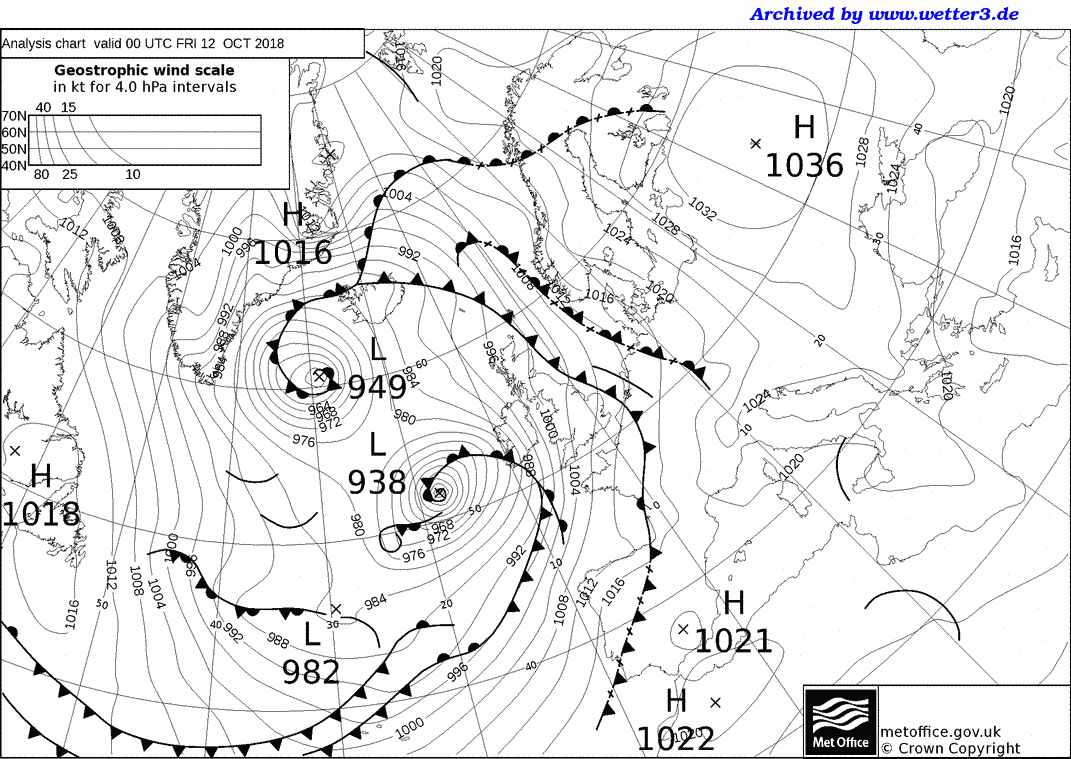
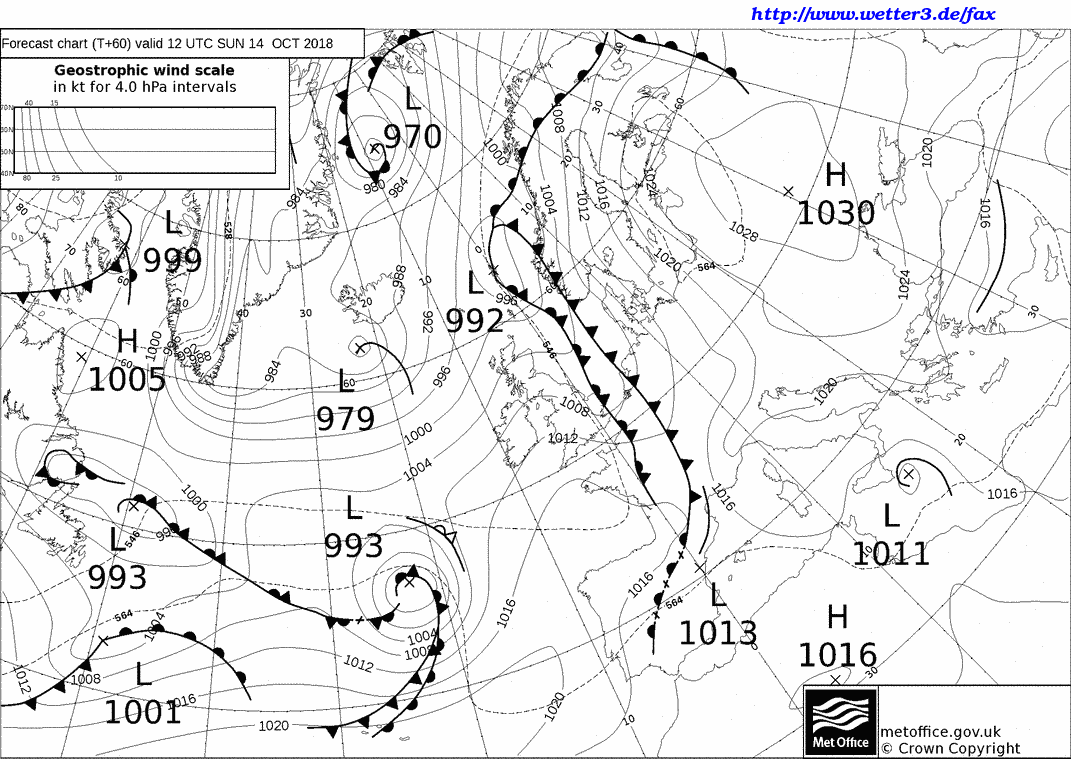
Weather forecast (also see Blog 22: Florence, Mangkhut and Helene ……., 17 Sep, and Blog 23: The weather theme continued ……..., 23 Sep). Storm Callum hits NW UK today with forecast wind speeds of 50+ knots and rough/very rough conditions in the SW approaches to the English Channel. Hurricane Michael is currently battering Florida. If Michael doesn’t blow itself out (which it might) then any remnants could be here towards the end of my Level 2. Right now it’s blowing quite hard up here in Staffordshire. Storm Callum is currently 100 miles west of Shannon, filling, and will be in sea area Faeroes by midnight tonight. There are gale warnings in force for every sea area (See Blog 23) around the UK except Thames and Dover and this morning sea area Wight is wind: southerly force 5 to 7, increasing gale 8 at times, sea state: moderate or rough, occasionally very rough, visibility: moderate or good. The longer range forecast is for Callum to blow through by Sunday, in fact Sunday looks much, much calmer. I hope not too calm.
Lets be honest, as regular readers will appreciate from Blog 9, and at the risk of labouring the point/tempting fate, if I don’t fall off the yacht it’s got to count as an improvement. “See” you at the end of next week!
Never mind posts about “this time next year!” This time next week it’s Clipper Level 2 training.
“A core element of the Clipper Race experience is the pioneering training programme that enables novice and skilled yachts-people to tackle the most challenging situations on the planet.” – The Official Race Crew Manual.
The aim of Level 2 is to take the crewing skills from Level 1 (see blog 9 Have you heard the one about the Englishman etc etc published on 9 July) and apply them to offshore sailing and life onboard. We will concentrate on the development of our sailing skills but focus more on the living onboard and operating in a watch system and this Level has a stronger offshore sailing element than Clipper Level 1.
So its back to Portsmouth on Friday for a full day’s Sea Survival course on the Saturday starting at 0800 (classroom and swimming pool, immersion suits, life jackets and life Rafts) before joining a Clipper 68 on Saturday evening, completing some alongside refresher training Saturday night and Sunday morning, and going to sea later on the Sunday. This time it’s sailing the yacht in watches (some combination of 6 hours on, 6 hours off and 4 hours on, 4 hours off – although other watchkeeping routines are available – and probably hot-bunking (sharing a bunk space with someone in the opposite watch) and plenty of sail, eat, sleep, repeat. Not necessarily in that order and certainly not in equal proportions. There will be another assessment thrown in there somewhere, plus another deep clean at the end and success for me might be just as simple as not falling off the yacht this time.
I’ve expanded my kit for this time with one or two bits and pieces I hope to take with me next year so I hope to take some of my wider mental preps further than I did back in April. My head torch has been recharged, the batteries in my “electric’ razor have been charged following my earlier “beard experiment” (see blog 11 What Will Crossing The South Atlantic etc REALLY Look Like published 14 July), I’ve tried-out waterproof covers for my phone and iPad (for blogging and photography purposes – although the latter now also carries a knot tying app!) and I’ve invested in a few sets of anti-snoring devices – that’s earplugs to you and me. With the notable exceptions of not knowing many, if any, of the men and women I will be sailing with, nor, for that matter if we are turning left or right once clear of Gosport next Sunday …….. then I think I’m almost ready.




![IMG-20180412-WA0014[21656]](https://i0.wp.com/keithsclipperadventure.com/wp-content/uploads/2018/06/img-20180412-wa001421656.jpg?w=351&h=263&ssl=1 "IMG-20180412-WA0014[21656]")




 cemeteries and there are some 2,500 Commonwealth War Cemeteries worldwide. In each of these cemeteries headstones inscribed simply “A soldier known unto God” mark the final resting places of those who could not be identified. The huge monuments at the Menin Gate and at Thiepval list the 55,000 and 72,000 British and Commonwealth troops who have no known graves from the battles around Ypres and on the Somme respectively in The Great War. It is often surprising to come across sailors at some of these sites so far from the sea but the Royal Navy provided a Division, some 10,000 men, who saw action on the Western Front in the First World War, including during the battles on The Somme and at Passchendaele.

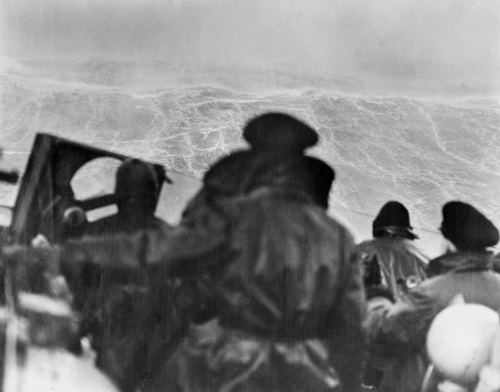


 Services where such wreaths are laid on the site of a wreck of a ship with the same name are particularly moving. Ships operating in the South China Sea nearly always divert to hold Remembrance services over the wrecks of HMShips Prince of Wales and Repulse, the final resting place of over 800 officers and men killed in 1941. Both wrecks, upside down in about 65m of water, have buoys and wires fixed to their propeller shafts to which large white ensigns are attached and regularly replaced, beneath the surface of the sea.






 in) the size of the mainsail, the “outhaul” (a rope that is used to control the shape of the curve of the foot of the sail) and the “topping lift” (a rope that applies upward force on a boom used primarily to hold the boom up when the sail is lowered) – pretty much everything comes into the snake pit. All are generally different colours and most come through “clutches” (provided for some lines to grip under tension by means of a lever and cam, which enables winches to be freed for other purposes) and a “jammer” each of which is, generally, labelled. Ok so far so good. After a little experience it IS possible
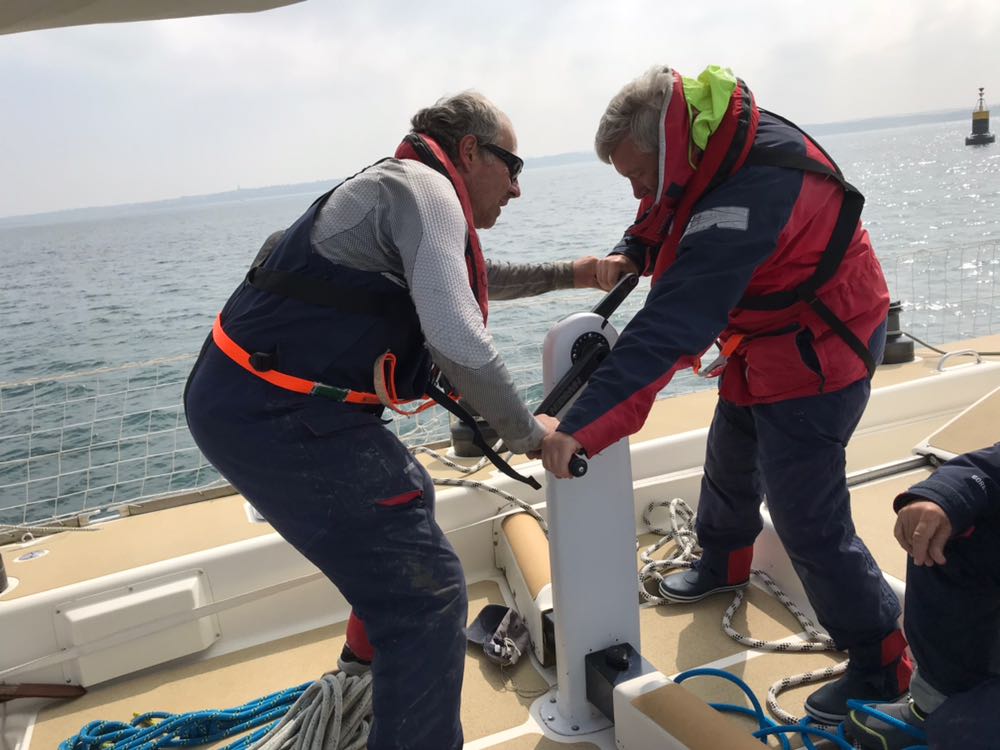
 when making a new tack between the mast and the boom during the reefing of the Mainsail. It follows that when “shaking out the Reef” and re-hoisting the Main that the handy billy must be released by “spiking” the release mechanism by use of a marlin spike (or similar) kept in the snake pit.


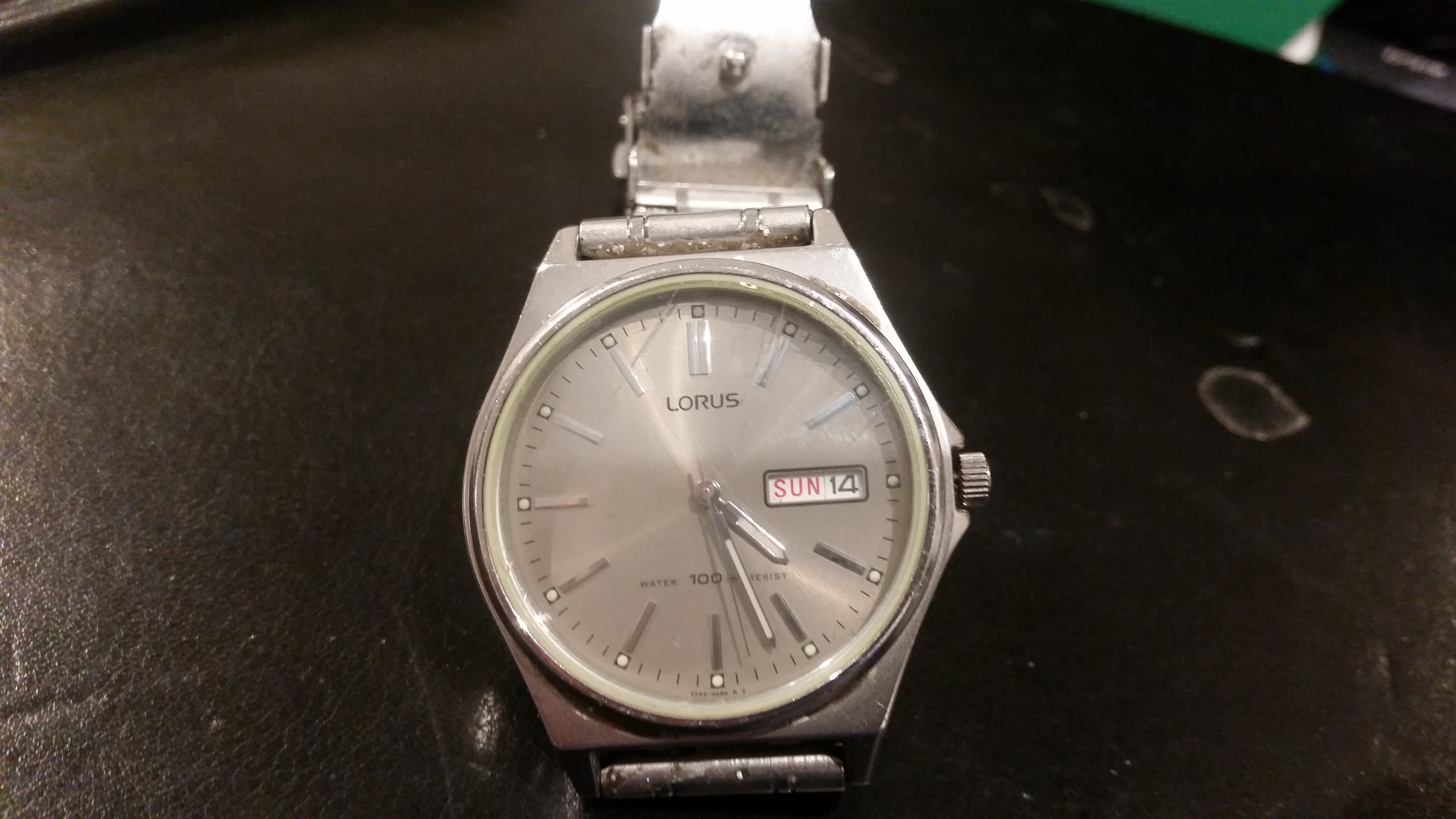 meant my battery had packed in. I don’t remember the last time it happened, but watchkeeping ……….. without a watch …………. adds a certain je ne said quoi to waking in the dark of a pitching yacht, woken by some strange noise or sudden lurch, and NOT knowing what time it is, not knowing how much longer you have until your opposite watch will wake you from your interrupted slumber, and not knowing how much more sleep you might get if you managed to get straight back to sleep. It makes remembering to make hourly log book entries that little bit more difficult too. Somewhat un-nerving at the start it did, eventually, become rather liberating. Time becomes defined by changes in the light as the sun sinks or rises; by meal “times” even when whole-crew yacht evolutions make lunch something of a moveable feast. Sleep, eat, sail, repeat. Maybe I should try it more often? Or maybe I should quit trying to be philosophical and just go out and buy a new watch battery 😉.


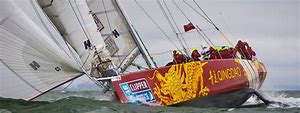 2017-2018 Round The World Race. During Leg 4 around Australia, Qingdao was hit by lightning during a 40knot Southerly Buster (violent squall) and still finished 5th on arrival in the Whitsundays. Chris and his crew achieved 4 podium finishes: 3rd into Sydney, 3rd on arrival into Sanya, 1st across the North Pacific into Seattle and 1st in the final race from Derry-Londonderry to Liverpool. Qingdao finished 3rd overall with 135 points, only 4 points behind Visit Seattle in 2nd (139 points) and only 8 points behind the winners Sanya Serenity Coast (143 points). In his profile interview for Clipper ahead of the previous race, in answer to the question, “what’s your favourite word?” Chris replied: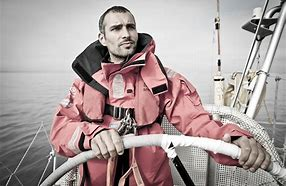
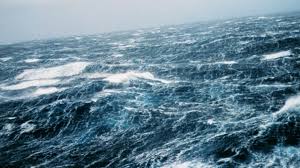

 We (21 of us in total) started the Saturday morning at Brune Park School in Gosport for
 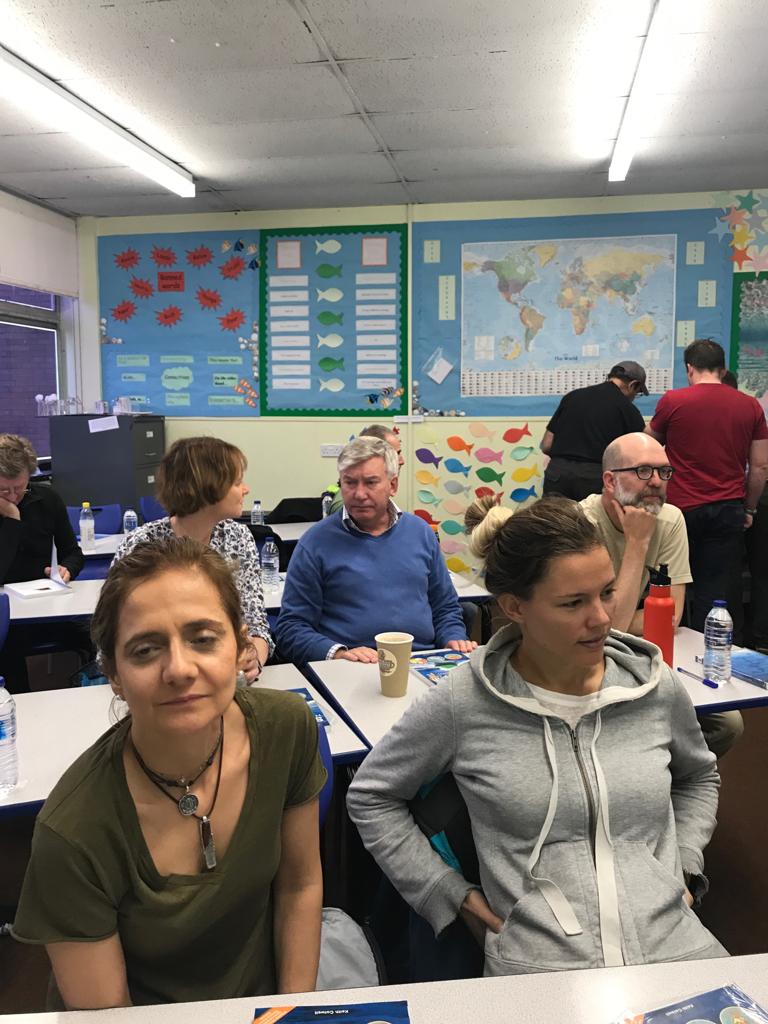 the Clipper version of the RYA Sea Survival Course. It had been about 12 years since I last did a Sea Survival Course and Brune Park School swimming pool was a vast improvement on Horsea Lake. The first half of the day was in the classroom looking at just about everything that could go wrong (fires, floods, collisions, heavy weather, man over boards, catastrophic sinking, cold water shock, hypothermia, frostbite, sea sickness, starvation, dehydration etc etc – all good morale boosting stuff!) and various chances of survival (or otherwise) plus a vast array of equipment and techniques
 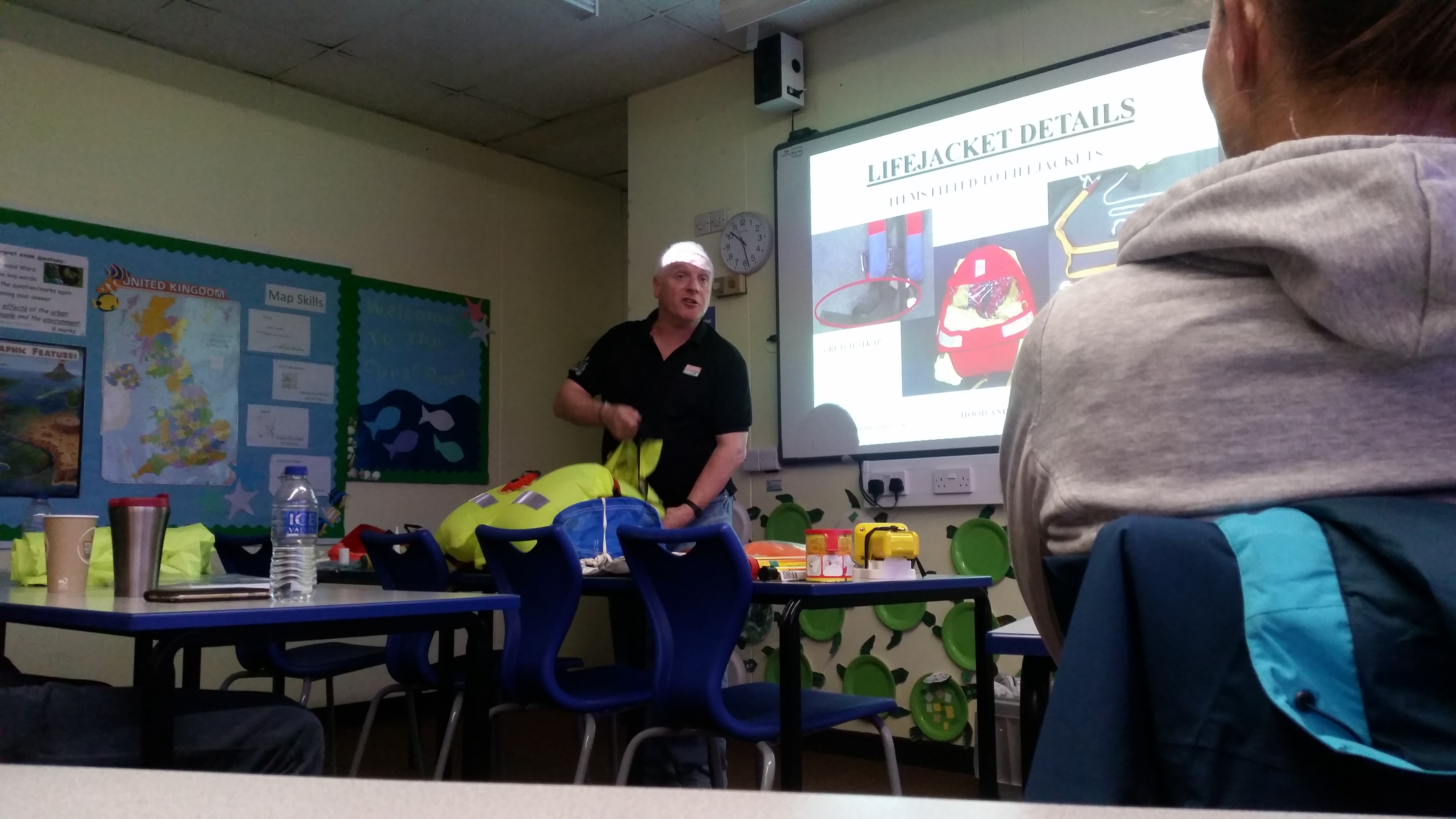 all designed to make survival/rescue a realistic possibility (warm clothing, waterproofs, dry suits, abandoning ship controlled, abandoning ship catastrophic, EPIRB – Emergency Position Indicating Radio Beacon, SART – Search and Rescue Radar Transponder, flares, life jackets, spray hoods, life rafts and what to take with you, food rationing, water rationing, first aid etc etc). Top tip – only leave the yacht as a last resort, usually only AS it sinks or if it catches fire and you can’t put the damn thing out. Take the EPIRB with you if you abandon the yacht but if there is no time, and the yacht sinks quickly then Clipper EPIRBs, like Clipper life rafts, have hydrostatic releases which will “fire” as the yacht sinks (normally at depths of between 1 and 4 metres or 3 to 13 feet) 🙂

 practiced a floating-feet together-group-huddle. And then finally we got to go boating – or rather rafting. Life rafting. 10 or so of us in an 8 man life raft was certainly cosy – and very warm very quickly – and we practised lookouts, baling, rigging and steering by drogues. We also practiced, individually, righting a capsized life raft by pulling it over our head, remembering at the vital moment to raise a fist to punch the floor as it drops on top of you so as to create an air pocket in which you can breath and thus orientate yourself to escape. Life rafts have large stability pockets that hang down beneath them and fluorescent strips on the underside to indicate escape routes to avoid entanglement in these pockets. It pays to orientate yourself before trying to get to the surface. It would be doubly ironic to drown UNDER a life raft!

 was torpedoed in the South Atlantic on 23rd November 1942. The ship sank in 2 minutes. After 2 hours in the water Lim found and climbed on to a 8ft square wooden raft. The raft had several tins of biscuits, a 40 litre jug of water, some chocolate, a bag of sugar lumps, some flares, two smoke pots and a torch. After his ordeal (he was rescued by Brazilian fishermen as he drifted near the coast of Brazil), he was awarded the British Empire Medal and after the war he emigrated to the United States. He died in Brooklyn in 1991 at the age of 72.
 Lucette, sank after being holed by a pod of killer whales 200 miles west of the Galapagos Islands in the Pacific. Dougal Robertson told the story of their survival in the book The Last Voyage of the Lucette (with a forward by Sir Robin Knox Johnson). Also see
 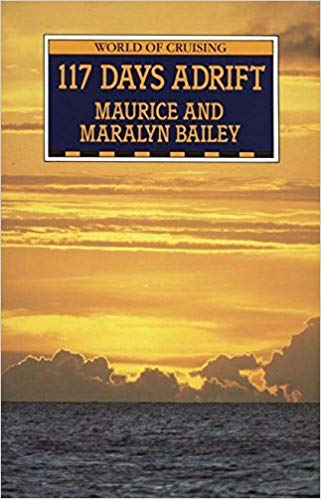 1973. Their journey began from Southampton and their intended destination was New Zealand. They passed safely through the Panama Canal in February but were struck by a whale at dawn on 4th March. They managed to salvage some supplies, some food and a compass and transfer them to an inflated life raft and a dingy before Auralyn foundered. After drifting some 1,500 miles they were rescued by the crew of a South Korean fishing boat on 30th June and were brought onboard in an emaciated state. They recounted their story in the book 117 Days Adrift, published in 1974 and, the following year, they returned to sea in their new yacht, Auralyn II.
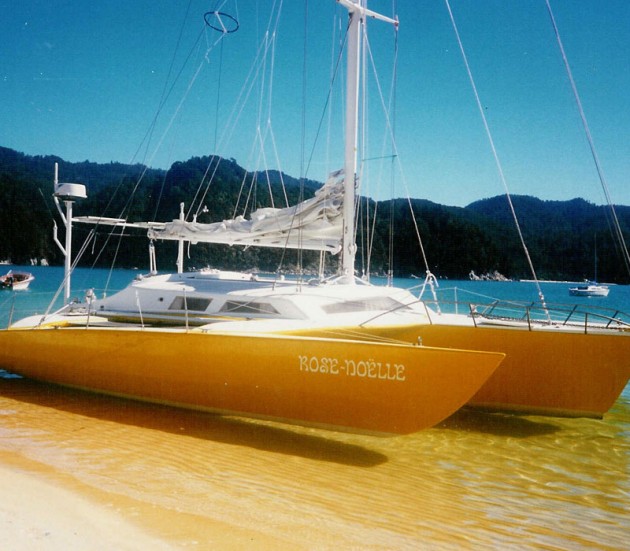 John Glennie, Rick Hellriegel, Phil Hoffman and James Nalepka survived 119 days on the upturned hull of their catamaran Rose Noelle in 1989, when it capsized in the southern Pacific off New Zealand after being hit by a rogue wave. Glennie and Nalepka both wrote books about their ordeal and their story was told in a 2015 New Zealand television film, Abandoned. The other crew admitted they came close to killing Glennie, blaming him for getting them into trouble in the first place!
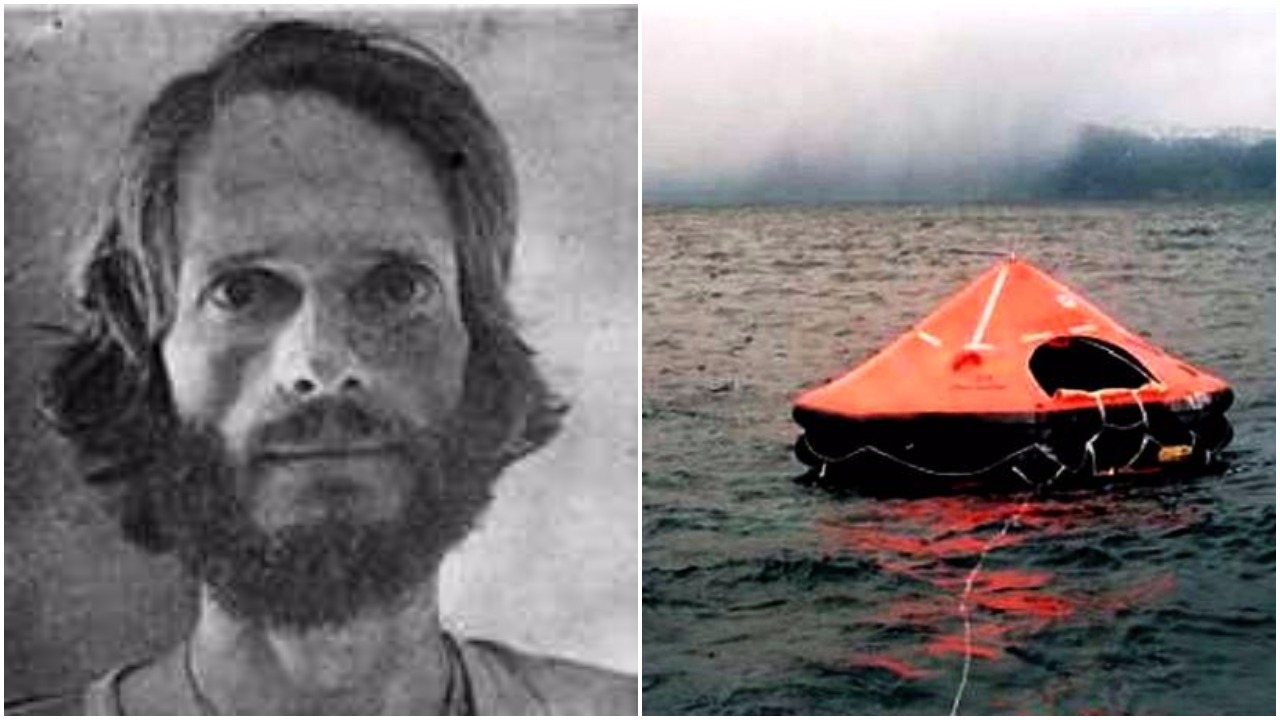 night storm and became swamped. In his book, Adrift: 76 Days Lost At Sea, Callahan writes that he suspects the damage was caused by a collision with ………………. yes, you guessed it………….…. a whale. Callahan escaped into a 6 man life raft and managed to retrieve a number of essential items including a sleeping bag, some food, charts, a short spear gun, flares, torch, solar stills for producing drinking water and a copy of Sea Survival, a survival manual written by ……………… Dougal Robertson of Lucette fame! Having survived on mahi-mahi, triggerfish (which he speared), flying fish, barnacles and birds that he caught, and using his stills, and captured rain water, to produce up to a pint
  of water a day, he drifted for some 1,800 miles and across at least two shipping lanes (he spotted 9 ships) without rescue. On the evening of 20th April 1982 he spotted the lights of an island south east of Guadeloupe and was rescued by local fishermen the next day. During the ordeal he faced sharks, raft punctures, equipment deterioration, physical deterioration and mental stress. He lost a third of his body weight and was covered with scores of saltwater sores. He described seeing the night sky at one point as “a view of heaven from a seat in hell” and still enjoys sailing and the sea, which he calls the world’s greatest wilderness.




 Pretty Much All At Sea