
“Twas the night before Clipper, when all through the house,
Not a creature was stirring, not even a mouse.”
……… which is not entirely accurate as the creature that was stirring was me for final pre-Clipper Level 2 training preps.

Phone is in it’s waterproof case. iPad likewise. Anti-snore devices (earplugs) packed, base layers, mid layers, thermal socks, waterproof socks, some spares etc etc etc. As I touched on previously I’m trying out “stuff” I will probably race with – a combination so far of Musto (gotta use that Clipper discount!), ISObar, SportsPursuit, and even ALDI kit.
I tried very hard not to take too much gear on Level 1, with some success, and now I’m looking at, and trying out, minimum packing, organising my kit and reducing weight. So this is the time to try out some of the waterproof kit bags I will be using on the race. I have purchased some Musto kit (other yachting suppliers are available 😉) but I have also shopped around and Aldi were selling merino wool base layers on line and in stores recently. I’ve got some thermal gloves for helming but otherwise I’m not bothering with gloves. I already feel much more comfortable handling sheets (ropes) particularly in the vicinity of winches, without them. I’ve not yet replaced my knife (not sure it’s quite up to the task) nor my sailing boots (fine for the first couple of training levels but NOT good enough for the 4 big ocean crossings) but my Ocean sleepware sleeping bag seems just the ticket.
Knots practiced (bowline, Round turn and two halve hitches, clove hitch, rolling hitch, reef knot, sheet bend, double sheet bend, admiralty stopper knot) and even the tugman’s hitch practiced on the aga kettle substituting for a winch and the kettle spout doubling for the self-tailor! No expense spared!


Sail anatomy, points of sail, mainsail controls, headsail controls and safety all revised.
So, how am I feeling?
Nervous to be honest. I think there will always be a certain degree of excited trepidation. Heck, as I explained on Tuesday, I don’t even know if we are turning left or right out of Gosport when we start, nor for that matter who I will be sailing with. There is much to remember, or try to remember, and still much to learn. And I know it!
There is also a degree of comfort and familiarity as I return to a world I have long inhabited where left is port, right is starboard, beds are bunks, toilets are heads, kitchens are galleys, floors are decks, ceilings are deckheads, doors are hatches, stairs are ladders, speed is in knots not mph/kmph and perhaps more relevant to an RN readership, food is scran, salt is sea dust, waves are gophers, a mile is 2000 yards, your day is split into Middle, Morning, Forenoon, Afternoon, First Dog, Last Dog and First and “all night in” means …… no overnight watches.
Fitness (also see Blog 3: It’s All Really A Question of Balance, 21 May, and Blog 21: Somewhere a clock is ticking………, 11 Sep). Good news so far. 40 lengths of the swimming pool at lunch time yesterday, only missed one yoga session since Blog 21, still got elasticity in my band (so to speak!) and Trevor continues to enjoy the walking.
Weight (also see the penultimate paragraph of Blog 21: Somewhere a clock is ticking ………., 11 Sep). So far so good. 0.8lb UNDER the top secret target weight that I set myself to hit for the start of Level 2 training and a full 7lbs lighter for this blog (no. 27) than I was for Blog 21.

Weather forecast (also see Blog 22: Florence, Mangkhut and Helene ……., 17 Sep, and Blog 23: The weather theme continued ……..., 23 Sep). Storm Callum hits NW UK today with forecast wind speeds of 50+ knots and rough/very rough conditions in the SW approaches to the English Channel. Hurricane Michael is currently battering Florida. If Michael doesn’t blow itself out (which it might) then any remnants could be here towards the end of my Level 2. Right now it’s blowing quite hard up here in Staffordshire. Storm Callum is currently 100 miles west of Shannon, filling, and will be in sea area Faeroes by midnight tonight. There are gale warnings in force for every sea area (See Blog 23) around the UK except Thames and Dover and this morning sea area Wight is wind: southerly force 5 to 7, increasing gale 8 at times, sea state: moderate or rough, occasionally very rough, visibility: moderate or good. The longer range forecast is for Callum to blow through by Sunday, in fact Sunday looks much, much calmer. I hope not too calm.

Lets be honest, as regular readers will appreciate from Blog 9, and at the risk of labouring the point/tempting fate, if I don’t fall off the yacht it’s got to count as an improvement. “See” you at the end of next week!


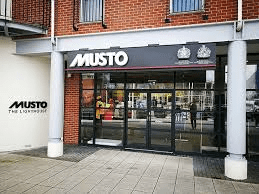 announcement”. Well, the “said announcement” was made earlier this week. The Musto Lighthouse Store in Gunwharf Quays, Portsmouth was the scene of our earlier “suits you, Sir” experience and an opportunity to meet the Musto team and be measured for our kit. Musto will be the official kit suppliers for the 2019-2020 and the 2021-2022 editions of the Race.
 established in 1964 by Olympic sailing silver medalist, Keith Musto, who, when competing in the Tokyo Olympic Games, noticed a gap in the market for high performance sailing kit. Since then the Musto brand has pushed the boundaries of design and manufacturing and is at the forefront of product innovation and design. Holding two Royal Warrants, Musto gear is sold in over 40 countries, was worn by 70% of the teams competing in the last Volvo Ocean Race, was the brand choice of the leading sailors in the 2016-2017 Vendee Globe and was the official partner of Groupama Team France for the 2017 America’s Cup.
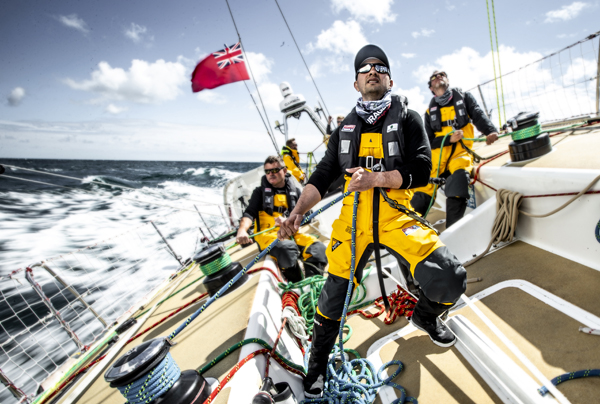
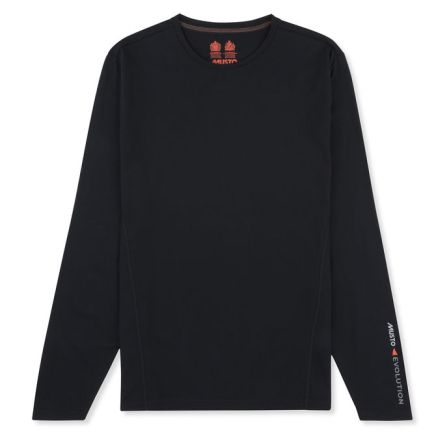
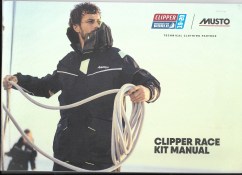 “three layer” clothing systems most of us will be adopting, Musto will provide our branded clothing once crew allocation and boat sponsoring is announced. I’ll write about the differences in base layer, mid layer, and outer layer with the differences in moisture wicking, ventilation, temperature control and even antimicrobial finishes – that’s pong- reduction-in-a-no-shower-environment to you and me! – in a future blog, but Musto are providing each Clipper crew member with the following:
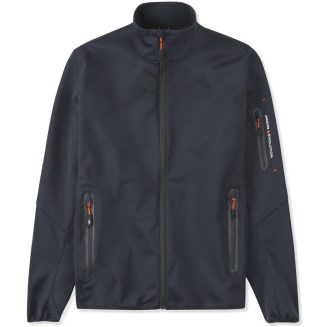 encourage (encourage???) water to bead and run off the fabric. This means I can enjoy the outdoors on days with light showers and changeable weather in this streamlined, breathable softshell jacket. Can’t wait.
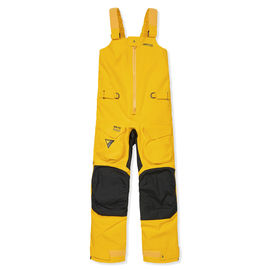 that exceeds expectations (here’s hoping). Extremely durable, impeccably waterproof and windproof and extremely breathable, they are considered the toughest 3-layer GORE-TEX Pro fabric. It has an Ocean Technology membrane, “Cordura” seat and knee patches, reinforced wear points and special removable impact pads in the knees that move with me but lock hard on impact, particularly deck impact, to provide additional protection.
 durable and snag resistant. It has an anatomically cut fleece-lined collar for extra heat retention, a fluorescent, fully adjustable roll-away GORE-TEX hood for protection even over a helmet with a rigid peak to the hood designed to channel spray away from the face. It has an engineered, ergonomically shaped, fully adjustable spume visor to protect my face from spray, inner latex seals and cuff seals for additional waterproof protection, photoluminescent prismatic reflectors for high visibility at night and laser cut draining holes for all pockets to reduce drying times and presumably to allow all that sea water that is NOT going into my face, to drain away!


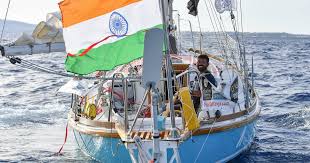 from France on 1st July and seven boats have so far withdrawn from the race. On Friday, 70 knot winds and 45ft waves in the Southern Ocean dismasted Thuriya and has left Tomy seriously injured 2000 miles off the coast of Western Australia. He managed to send a message saying he has a severe back injury and is immobilised, unable to eat or drink. Race organisers said Tomy was “incapacitated on his bunk inside his boat … as far from help as you can possibly be.”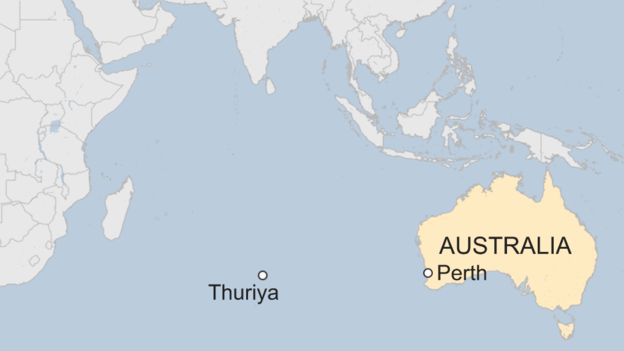


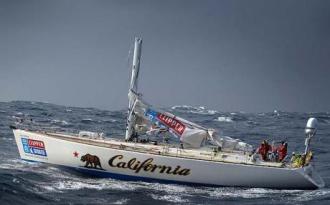 dismasted during the North Pacific leg of the Clipper 2009-2010 race or anyone from the North Pacific Leg 6 of the 2017-2018 edition who all experienced hurricane force winds and phenomenal sea states (waves in excess of 14m/46ft). Daunting indeed. And by the way, I should know, I’ve been at sea in THREE hurricanes.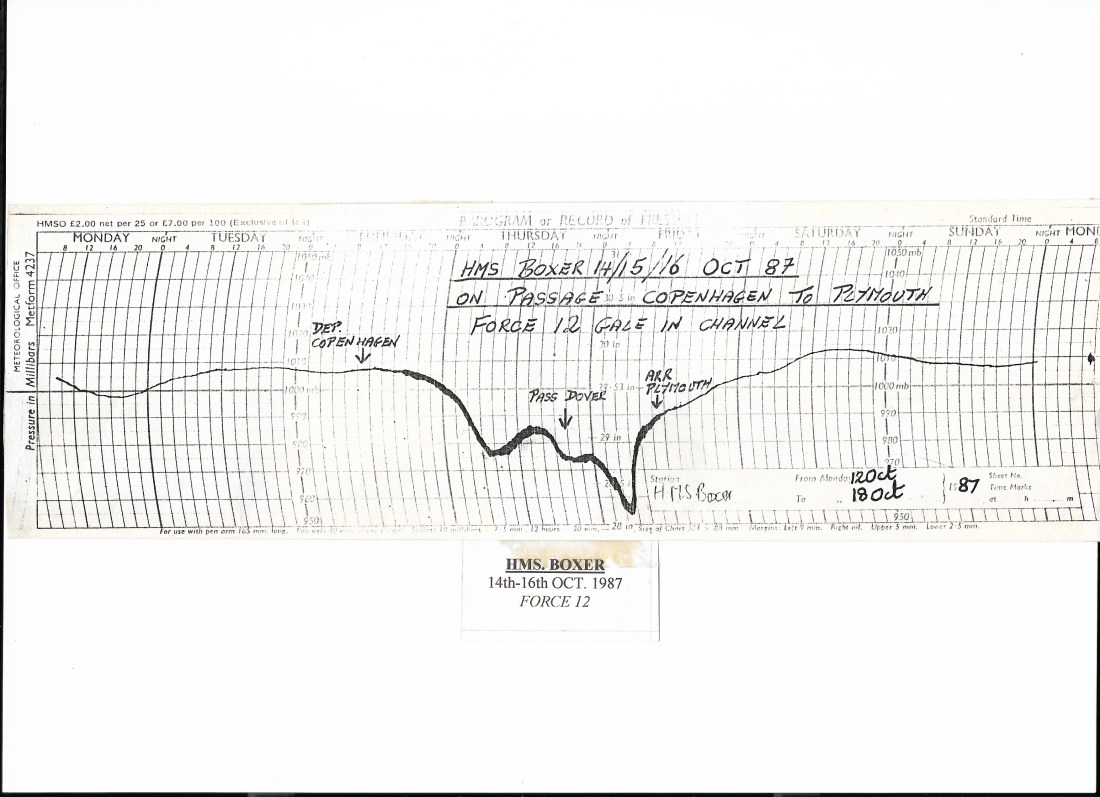


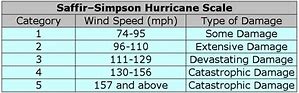 There were 4 particularly destructive hurricanes that year: Luis (Cat 4), Marilyn (Cat 3), Opal (Cat 4)and Roxanne (Cat 3). 1995 is currently recorded as the 5th most active season in history. In the destroyer HMS SOUTHAMPTON I was operating in the Caribbean as the UK’s West Indies Guardship, a role that year that had already involved an extended period operating in support of the island of Montserrat following the eruption, and continued rumblings of a volcano in the island’s Soufriere Hills. Luis started as Tropical Depression 13 on 27th August but had strengthened sufficiently to be categorised as Tropical Storm Luis by the 29th August and a Hurricane later that same day. By 1st September Luis was a Category 3 hurricane and by 3rd September, with sustained wind speeds of 150mph it reached Category 4.
 previous day. The eye of Luis passed over the north of Anguilla and the hurricane caused catastrophic damage to Barbuda, St Barthelemy, St Martin and Anguilla. Luis caused 19 deaths and left between 20,000 and 50,000 homeless, mostly in Antigua, Barbuda, Anguilla and St Martin and caused roughly $3bn (1995 USD) worth of damage. We were to remain at anchor off Anguilla until 15th September providing communications for the Governor back to the FCO in London, and landing sailors each day to repair the airport, open the port, fix generators and repair schools and Royal Marines to support the local police. As early as 13th September we were keeping a weather eye on Hurricane Marilyn! Luis was to remain a major hurricane for over a week and was the most devastating hurricane to strike the northern Leeward islands in the 20th Century.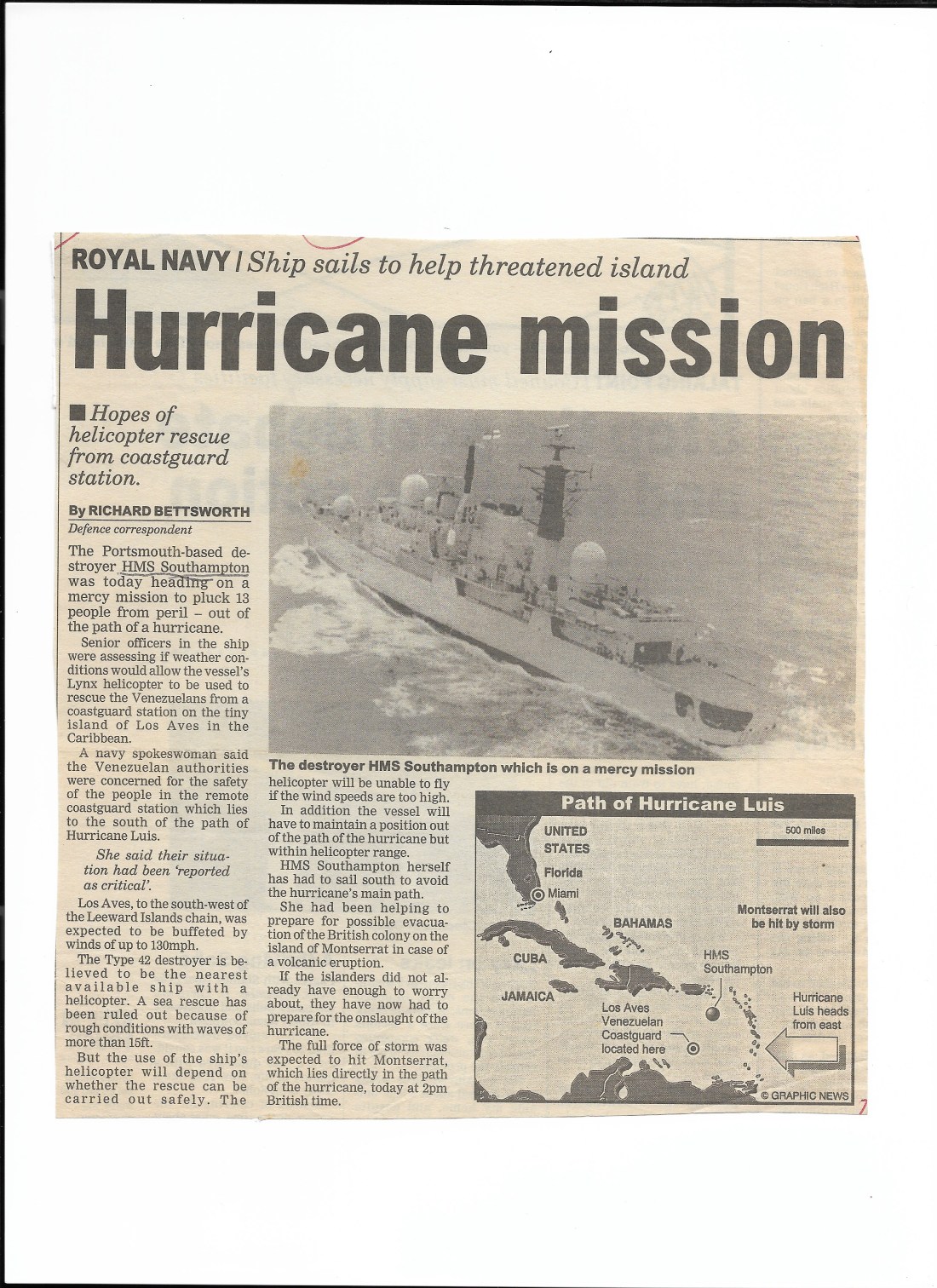
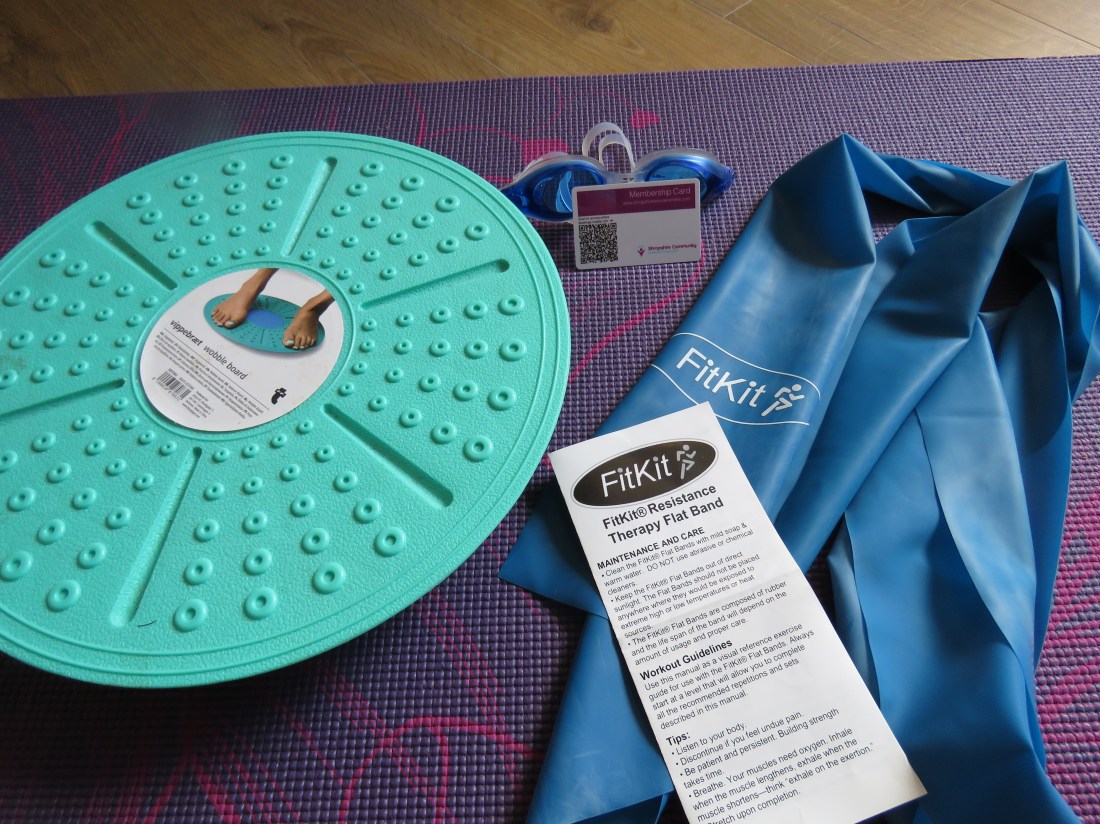 namely a wobble board, FitKit Resistance Therapy Band, a membership of Market Drayton Swimming Centre and (yes your eyes do not deceive you) – a yoga mat. Stretching exercises – not mentioned in any great detail back in May – have appeared courtesy of FitKit (alternating bicep curls, chest press, chicken wing (don’t ask!), squats, leg presses, overhead tricep extensions, lunges and donkey kicks (definitely don’t ask!) and I start yoga – yes I know, all that downward dog, leotard stuff ……. tomorrow – honest!




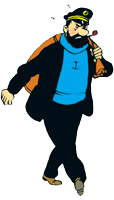 alcoholic character with a love of rum and Loch Lomond whisky, he is descended from the pirate Sir Francis Haddock, whose treasure he finally recovers and with his newfound wealth he regains his ancestral home Marlinspike Hall. In The Shooting Star he is appointed President of the Society of Sober Sailors (No, I’ve never heard of it either!). Haddock remained without a first name until the last completed story (Tintin and The Picaros – 1976) when the name Archibald first appears. In the same book, Professor Calculus ‘cures’ him of his taste for alcohol. What a horrible way to end – told you it was only a cartoon!!
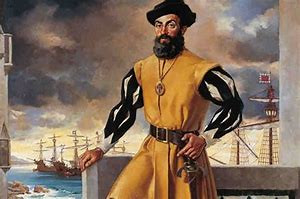 the first circumnavigation of the Earth. The expedition was completed by Juan Sebastian Elcano, who few people have ever heard of, as Magellan was killed in the Philippines in April 1521. The 373 mile long passage from the South Atlantic to the Pacific originally called (by Magellan) All Saints Channel because the fleet travelled through it on 1st November or All Saints Day, is now called the Strait of Magellan. His navigational skills have also been acknowledged in the naming of celestial objects: the Magellanic Clouds – now known to be two nearby dwarf galaxies; twin lunar craters of Magelhaens and Magelhaens A; and the Martian crater of Magelhaens. Of the 5 ships and 237 men who set out with Magellan only one ship, the Victoria – the smallest carrack in the fleet – and 18 men completed the first circumnavigation.
 passing-out from Britannia Royal Naval College, Dartmouth the following year. His wartime service included the battleship HMS RAMILIES, protecting convoys of the Australian Expeditionary Force in the Indian Ocean, the cruisers HMS KENT and HMS SHROPSHIRE and the battleship HMS VALIANT in the Mediterranean Fleet. He saw action during the Battle of Crete and at the Battle of Cape Matapan, winning a Mention In Dispatches during the latter action in control of VALIANT’s searchlights during the point-blank battleship night engagement with elements of the Italian Fleet. He was First Lieutenant of the destroyer HMS WALLACE in convoy escort tasks on the east coast of Britain and for the invasion of Sicily. In 1944 he was appointed to the new destroyer HMS WHELP where he saw service with the British Pacific Fleet and he was present in Tokyo Bay when the instrument of Japanese surrender was signed on 2nd September 1945, the Japanese having surrendered on 15th August. After his marriage in 1947 his naval service included tours in the Admiralty, Malta, as First Lieutenant of the destroyer HMS CHEQUERS and command of the frigate HMS MAGPIE (1950-1951).
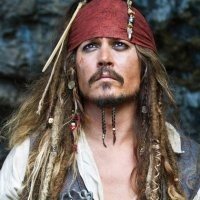 series who first appeared in the 2003 film Pirates of the Caribbean: The Curse of the Black Pearl and four sequels. Sparrow is one of the nine pirate lords of the Brethren Court, the Pirate Lords of the Seven Seas. He can be treacherous and survives mostly by using wit and negotiation rather than by force, opting to flee most dangerous situations and to fight only when necessary. He is shrewd, calculating and eccentric. Sparrow claims his “first and only love is the sea.”
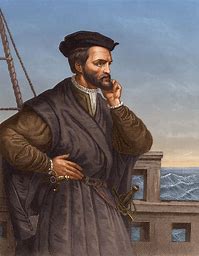 markets of Asia. His first crossing of the Atlantic took only 20 days and between May and August of 1534 he explored parts of Newfoundland, returning to France in September of that year convinced he had reached an Asian land. His second voyage (1535 – 1536) explored what is now the Saint Lawrence River reaching Hochelaga (now Montreal) on 2 October 1535. From mid November 1535 to mid-April 1536 his three ships lay frozen solid at the mouth of the St Charles River, under the Rock of Quebec. The ice was over a fathom (6 feet) thick, with snow four feet thick ashore. The expedition made it back to France in July 1536. He undertook his third and final voyage between 1541 and 1542 and this time any thoughts of finding a passage to Asia were long gone. The aim was to find the riches of Canada and to establish a permanent settlement along the St Lawrence River. On this trip Cartier’s men began collecting what they believed to be diamonds and gold, but which upon return to France turned out to be quartz crystals and iron pyrites, giving rise to a French expression: “faux comme les diamants du Canada” (“As false as Canadian diamonds.”). Cartier was one of the first to formally acknowledge that the New World was a separate land mass from Asia.
 a leg bitten off by the white whale Moby Dick, leaving him with a false leg made out of whalebone. Ahab is 58 years old at the time of Pequod’s last voyage. Instead of embarking on a regular whaling voyage, Ahab declares that he is out for revenge and nails a doubloon to the main mast by way of reward for the crewman who first sights the great white whale. When Moby Dick is eventually sighted, a disastrous three-day chase begins. Ahab’s hatred robs him of all caution and finally, entangled by the line of his own harpoon, Ahab is dragged beneath the waves and drowns as Moby Dick dives and takes the still cursing Ahab with him.



 Pretty Much All At Sea